Philippines Vacuum Recloser — Typhoon Failure Analysis and Wind-Resistant Remote O&M Solution for 13.2kV/34.5kV Distribution Networks
I. Core Challenges Facing the Philippine Distribution Network
1.1 Frequent Typhoons — Mechanical Impact and Post-Disaster Restoration
| Dimension | Data | Impact on Distribution Network |
|---|---|---|
| Average annual typhoon landfalls | 20 (PAGASA data) | Lines endure continuous mechanical stress during the May-December typhoon season |
| Super typhoon maximum wind speed | >250 km/h (e.g., 2024 Typhoon Gaemi) | Broken conductors, collapsed poles, hardware fatigue fracture |
| Post-typhoon area outage duration | 3-14 days (industry survey data) | Manual line inspection → restoration only after full-line repair |
| Safety risk of working in rain | Repair crew casualties concentrated post-typhoon | Reducing manual work in the rain is a critical requirement |
Traditional pole-mounted circuit breakers trip frequently under typhoon impact but lack automatic reclosing — each trip requires on-site manual closing. During typhoon season, EC technical staff are stretched thin, with some areas requiring a full week to complete line patrol and reclosing after a typhoon.
1.2 Archipelagic Geography — O&M Coverage and Logistics Challenges
| Dimension | Current Situation |
|---|---|
| Number of islands | 7,641, three major island groups (Luzon, Visayas, Mindanao) |
| EC distribution | 121 ECs operating independently, averaging 50,000-150,000 customers each |
| Technical staffing | Most EC maintenance teams have only 10-30 personnel |
| Inter-island transportation | 2-7 days by sea, remote islands require multiple mode transfers |
| Spare parts supply chain | Imported equipment spare parts lead time 8-16 weeks |
1.3 Vegetation and Animal Interference — Extremely High Proportion of Transient Faults
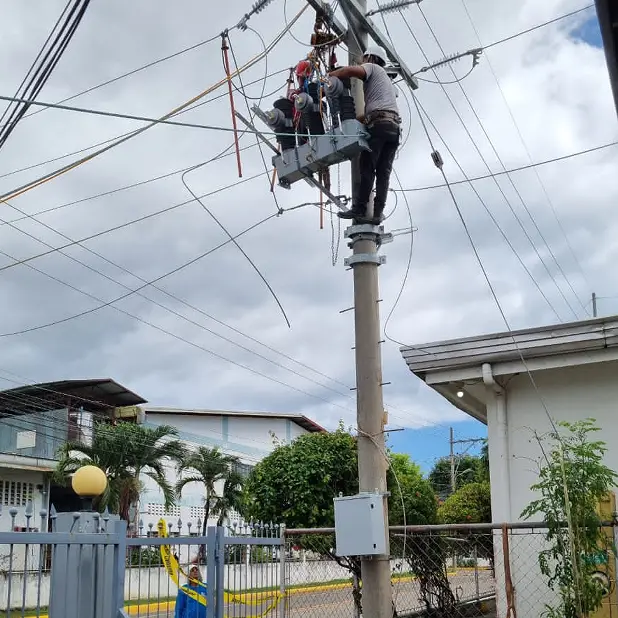
The Philippines has extensive tropical rainforest and coconut groves. Coastal coconut trees reach 20-30m in height, and broken branches frequently contact conductors during typhoon season. Mountainous lines pass through forested areas with frequent monkey, snake, and bird activity. According to operational statistics from some ECs:
| Fault Type | Proportion | Current Handling | Improvement Potential |
|---|---|---|---|
| Transient faults (vegetation/animal/wind swing) | 70-80% | On-site manual reclosing, 3-6h each | Auto-reclose can eliminate 80%+ |
| Permanent faults (broken conductor/pole collapse/equipment damage) | 20-30% | Full-line patrol to locate, 1-3 days | Fault location can be reduced to minutes |
1.4 Limited EC O&M Resources — Network Loss and Automation Pressure
| Dimension | Current Situation |
|---|---|
| SCADA penetration | Most ECs still rely on manual dispatch, automation coverage <30% |
| System loss rate | Some ECs as high as 12-18% (international benchmark <8%) |
| Investment capacity | Most ECs have limited budgets, requiring phased equipment upgrades |
II. Failure Mechanism Analysis: Why Traditional Circuit Breakers Cannot Withstand Typhoon Conditions
2.1 Mechanical Impact — Structural Fatigue and Interruption Overload
Typhoon damage to pole-mounted equipment occurs through three main paths:
(1) Conductor wind swing causing hardware fatigue: When wind speed exceeds 40m/s, the conductor swing angle exceeds the design value (typically 30-45°), subjecting tension and suspension clamps to cyclic bending stress. A single storm during typhoon season can produce hundreds of large-amplitude swings, causing hardware to reach fatigue life endpoint after 2-3 typhoon seasons.
(2) Short-circuit interruption cycles exceeding design limits: Typhoon-induced conductor breakage/contact creates high-current short circuits. Traditional circuit breakers typically have a mechanical life of 2,000-5,000 operations, but may endure 5-10 short-circuit interruptions in a single day during typhoon season.
(3) Insufficient enclosure structural strength: Some products on the market have enclosure walls only 1.5-2mm thick. When wind speed exceeds 50m/s, enclosure deformation leads to internal mechanism jamming and seal failure.
2.2 Salt Fog Penetration — Electrical and Sealing System Degradation Paths
Coastal areas of the Philippines have salt fog deposition rates exceeding 300 mg/m²·d (equivalent to ISO 12944-2:2017 C5-M class). Salt fog enters equipment through:
(1) Control cabinet breathing effect: Day-night temperature differences combined with solar radiation cause periodic pressure changes inside the cabinet. Enclosures without breathers or with insufficient IP54 protection will draw in salt-laden air during negative pressure phases. After 3-5 years, internal terminal blocks, circuit boards, and relay contacts develop green copper corrosion.
(2) Loss of silicone rubber shed hydrophobicity migration: After salt deposits on shed surfaces, under UV + high temperature, hydrophobicity migrates to the surfacepollution-contamination layer, causing increased surface leakage current when the contamination layer is wetted, ultimately triggering flashover.
2.3 Insulator Rain Flashover and Pollution Flashover
Typhoons bring continuous heavy rain (rainfall intensity up to 50-100mm/h), bridging insulator surfaces with water and increasing leakage current. Dry-band arcs form at shed edges; if the arc cannot self-extinguish, it develops into surface flashover.
III. Solution: Rockwill Outdoor Vacuum Recloser
3.1 Core Product Parameters
| Item | 13.2kV Model | 34.5kV Model |
|---|---|---|
| Rated system voltage | 13.2kV (max 15kV) | 34.5kV (max 38kV) |
| Rated current | 630A | 630A |
| Rated short-circuit breaking current | 16kA | 12.5kA |
| Rated frequency | 60Hz (Philippine standard) | 60Hz |
| Arc-quenching medium | High-purity vacuum interrupter | High-purity vacuum interrupter |
| Standard reclosing sequence | 3-4 shots, configurable | 3-4 shots, configurable |
| Total opening time | ≤35ms | ≤35ms |
| Wind resistance rating | ≥55m/s (≥16 on Beaufort scale)¹ | ≥55m/s¹ |
| Enclosure protection rating | IP65 (cable entry IP67) | IP65 (cable entry IP67) |
| Corrosion protection class | C5-M | C5-M |
| Environmental range | -10°C~+60°C, 95% RH | -10°C~+60°C, 95% RH |
| Communication protocols | DNP3 / IEC 60870-5-104 / Modbus TCP / IEC 61850 | Same |
| Control mode | Local manual + EC Web platform remote control | Same |
3.2 Typhoon-Specific Structural Reinforcement
| Reinforcement Item | Design Parameter | Industry Typical Value | Verification Method |
|---|---|---|---|
| Pole housing wall thickness | 3mm SUS304 stainless steel | 1.5-2mm | Finite element wind load analysis |
| Insulator creepage distance | ≥31mm/kV (34.5kV class) | ≥25mm/kV | IEC 60815 selection verification |
| Mounting bracket | Heavy-duty hot-dip galvanized, bolts ≥Grade 8.8 | Standard galvanized | ASTM B117-19 salt spray test 1000h |
| Cable entry | Double-layer waterproof sealed connector | Single-layer seal | IP67 grade verification |
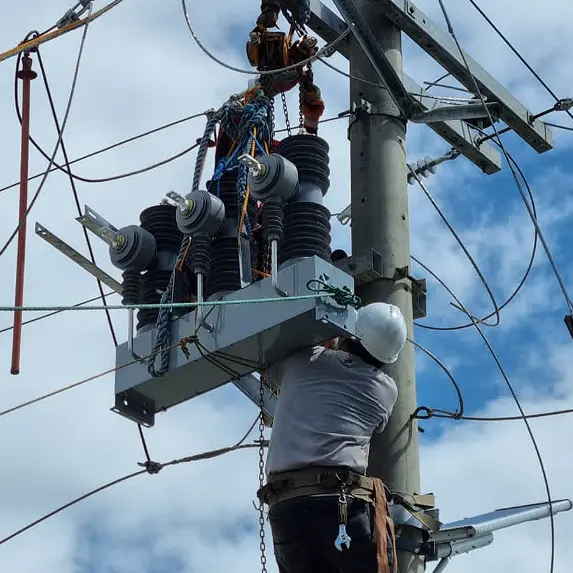
Modular Design: Single-phase modular structure, each unit <80kg, installable without heavy lifting equipment. Modules connect via standardized aviation plugs for plug-and-play on site, adapted to Philippine inter-island shipping and manual handling conditions on remote islands.
3.3 High Temperature, High Humidity, and Coastal Salt Fog Protection
| Test Item | Standard | Conditions | Result |
|---|---|---|---|
| Salt spray test | ASTM B117-19 | 1000h continuous spray | No red rust, no coating blistering, no seal degradation |
| Damp heat cyclic | IEC 60068-2-30 | 55°C / 95% RH, 6 cycles | Insulation performance passed |
| Temperature/humidity combined cycle | IEC 60068-2-38 | 12h temperature cycles × 3 | No internal condensation |
3.4 Intelligent Fault Self-Healing System
Equipped with an intelligent measurement and control unit adapted for the Philippine 13.2kV/34.5kV distribution network, designed per IEC 62271-111:2019:
- Multiple automatic reclosing: Supports 3-4 shot reclosing sequences with programmable intervals of 0.5-60s. Over 80% of vegetation/animal/wind-rain caused transient faults are cleared within the first 2 reclosing shots
- Fault type self-identification: Accurately distinguishes between transient and permanent faults. Transient faults automatically restore power and increment the counter; permanent faults automatically lock and isolate after failed reclosing, simultaneously reporting the fault location to the EC Web platform
- Fault recording: Standard fault recording function, capturing 5 cycles of voltage and current waveforms before and after the fault to assist incident analysis
3.5 Zero-Threshold EC Remote O&M — Web Platform Solution
To address the fact that most Philippine ECs lack SCADA systems, Rockwill provides a self-built Web remote O&M platform, requiring no SCADA master station investment:
| Function | Description | Application Scenario |
|---|---|---|
| Real-time monitoring | Real-time curves of voltage, current, power, power factor | Daily operation monitoring |
| Proactive fault alert | Trip/reclose success/lockout SMS + App push | Immediate fault notification when unattended |
| Remote open/close | Web-based remote operation | Post-typhoon remote test re-energization |
| Remote protection setting | Online modification, batch distribution | No on-site visit needed for load changes |
| Historical data query | Operating data + fault recording download | Incident analysis, outage statistics |
Security Access Control: The Web platform uses HTTPS (TLS 1.3) encrypted transmission, supports two-factor authentication (password + dynamic verification code), and maintains full audit trails of all operations. Remote open/close operations require two-level authorization confirmation to prevent misoperation.
Communication Method: Priority given to 4G LTE (coverage >85% on major Philippine islands), with satellite communication module optional for remote islands. Supports offline cache mode — local operation and data storage during network outages, with automatic re-upload upon reconnection. Communication protocols support DNP3, Modbus TCP, IEC 60870-5-104, IEC 61850.
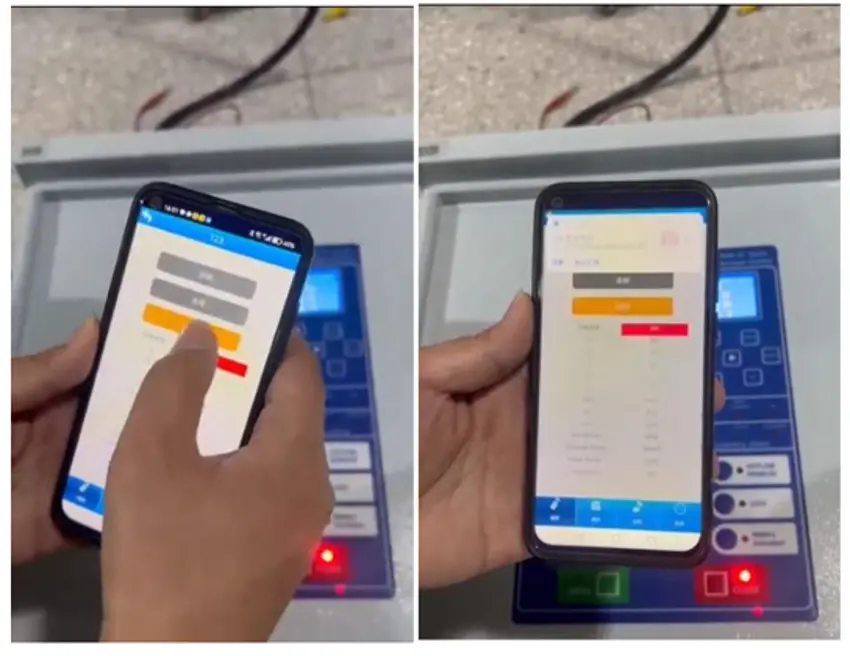
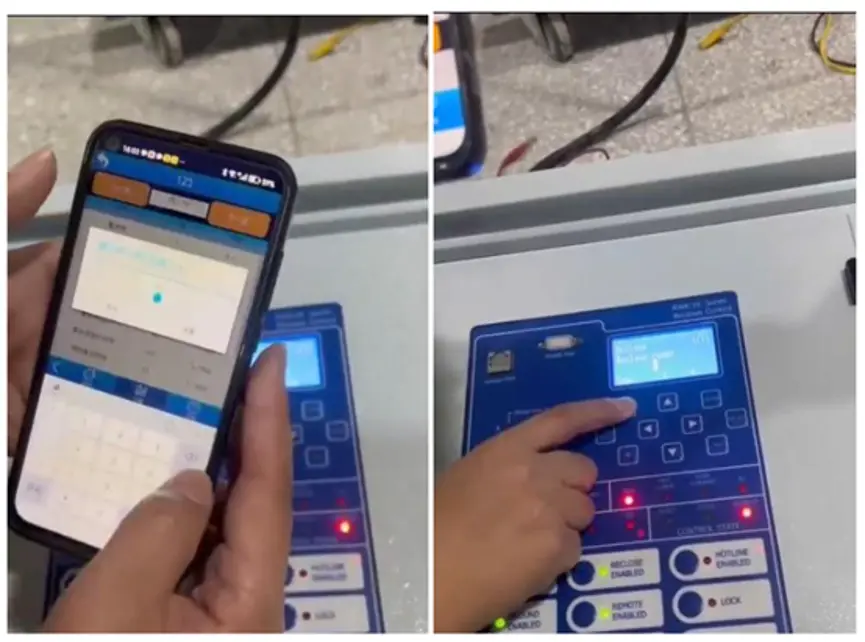
Extreme Scenario Response: If both 4G and satellite communication are simultaneously interrupted (e.g., typhoon destroying base stations), the equipment continues independent operation based on local protection settings, with auto-reclose function unaffected. Upon communication recovery, the equipment automatically re-uploads fault records and event logs from the offline period. Maintenance personnel can also visit the site to manually open/close via the local operation panel (IP65 rated, rain-operation capable).
3.6 Core Advantage Comparison
| Comparison Dimension | Traditional 13.2kV/34.5kV Pole-Mounted CB | Rockwill Outdoor Vacuum Recloser |
|---|---|---|
| Typhoon season fault restoration | On-site manual reclosing, 3-6h each; full-line patrol 1-3 days | Auto-reclose within 60s; remote test re-energization, no rain operation needed |
| Wind resistance | Typically no clear wind resistance rating | Structural reinforcement ≥55m/s (16 Beaufort), 3mm SUS304 housing |
| Corrosion protection | Standard coating, coastal 2-3 year corrosion | C5-M ≥320μm, design life ≥25 years |
| Daily O&M | Fully manual on-site patrols, EC staff stretched | Web remote platform + mobile alerts, patrols reduced 60-70% |
| SCADA dependency | Requires building own SCADA for remote access | Built-in Web platform, zero-threshold EC access |
| Fault location | Full-line patrol to find | Fault recording + location reporting, direct to fault point |
IV. Typhoon Season Risk Matrix and Graded Emergency Response Plan
| Risk Level | Trigger Condition | Response Timeline |
|---|---|---|
| Red (High Risk) | PAGASA issues TCWS #4 or above (wind speed ≥118km/h); or line outage caused by conductor breakage/pole collapse | Remotely isolate faulted section; dispatch repair within 4h after typhoon passage |
| Orange (Medium Risk) | PAGASA issues TCWS #2-#3 (wind speed 62-117km/h); coastal sections with salt fog + sustained high winds; or equipment has locked out after 3+ failed recloses | Increase remote monitoring to every 1h; schedule maintenance window within 72h |
| Yellow (Low Risk) | Normal thunderstorm season (TCWS #1 and below); single transient fault successfully reclosed | Maintain daily Web platform monitoring; complete comprehensive pre-season inspection before typhoon season |
- Receive PAGASA TCWS #4 or above warning → Batch update protection settings via Web platform (increase short-time delay protection sensitivity)
- During typhoon passage → Remotely monitor recloser operations; auto-report fault location upon lockout
- Post-typhoon → Deploy repair crews directly based on reported locations, skipping the full-line patrol phase
V. Implementation Roadmap
Phase 1: Pre-Typhoon Season Preparation (April-May Annually)
| Work Item | Standard |
|---|---|
| Equipment status check | Verify all recloser operating status and communication link integrity |
| Protection setting review | Optimize settings based on previous year's fault records |
| Spare parts prepositioning | Pre-stock key modules in Luzon/Visayas/Mindanao regional spare parts warehouses |
| Communication module test | 4G/satellite communication link connectivity test, SIM card balance/expiry confirmation |
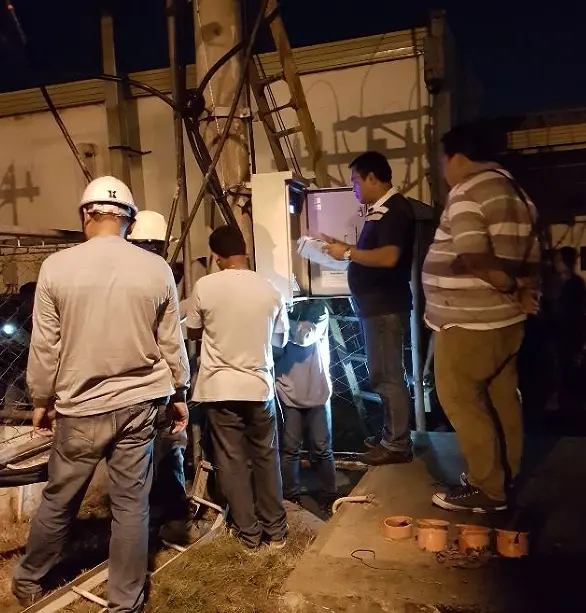
| EC operation training | Remote classroom review of Web platform operating procedures |
Phase 2: Typhoon Emergency Response (Landfall to 72h Post-Passage)
| Time Window | Action |
|---|---|
| 24h before typhoon landfall | Send equipment status snapshot via Web platform, confirm all devices online |
| During typhoon passage | Remote monitoring, auto-reclose handles transient faults |
| 0-4h post-typhoon | Plan repair routes based on fault location reports |
| 4-24h post-typhoon | Remote test re-energization to restore sections without permanent faults |
| 24-72h post-typhoon | On-site repair of permanent fault sections + comprehensive equipment status verification |
Phase 3: Post-Typhoon Season Assessment (Within 30 Days)
- Compile all recloser operation counts and fault recording data
- Analyze reclose success rate, fault type distribution, and protection setting reasonableness
- Produce quarterly operation report to inform optimization for the next typhoon season
VI. Installation Quality Control Checklist
- Mounting bracket-to-pole connection bolt torque compliant (≥Grade 8.8, torque per design drawing)
- Cable entry waterproof sealed connector tightened to IP67 grade
- Control cabinet breather correctly installed, desiccant status normal (not saturated/discolored)
- Control cabinet grounding resistance ≤4Ω
- Communication antenna orientation correct, 4G signal strength ≥-85dBm
- Control cables between main unit and control cabinet correctly wired, no loose connections
- Protection settings distributed per latest configuration table, parameter readback confirmed consistent
- Remote open/close test ×3, Web platform status feedback correct
- Fault simulation test (transient/permanent), confirm reclosing logic is normal
- System time synchronized to NTP server, ensure fault recording timestamp is accurate
- EC operator completes on-site acceptance sign-off
Deployed Equipment
-
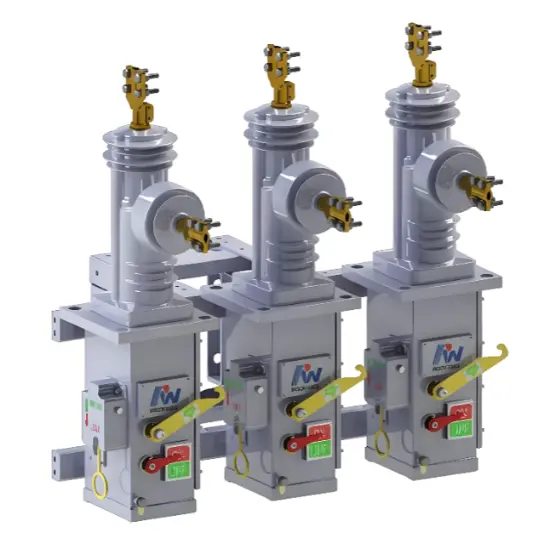 Outdoor MV Triple‑single Auto Recloser Source Manufacturer-15kV to 38kVThe RCW series outdoor medium-voltage triple-single automatic circuit recloser is an intelligent protection and control device designed for 15kV~38kV power distribution lines, complying with IEC 62271 and ANSI standards. Adopting vacuum interrupter, permanent magnetic actuator and integrated stainless steel tank, it integrates protection, measurement, communication, fault location and online monitoring. It can quickly isolate line faults and automatically restore power supply, significantly impr
 -
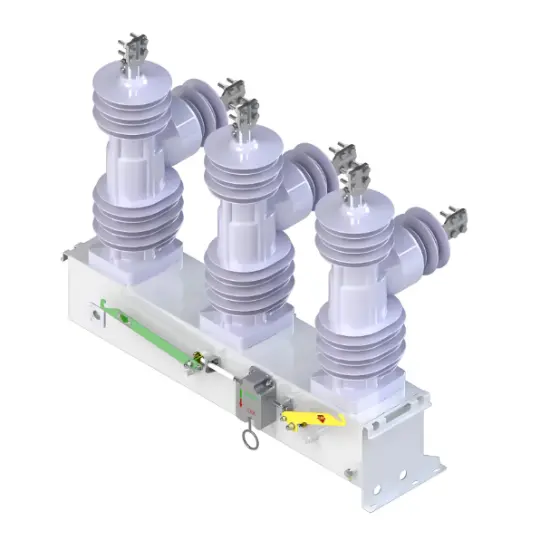 Outdoor Auto Circuit vacuum recloser/reclosure Direct Supply-38kVPioneer of China’s recloser track and the first specialized source manufacturer — that’s who we are after decades of focused efforts. We’ve strengthened our foundation via tech breakthroughs, guided the industry through standard-setting, and built a fully independent full-chain system from core R&D to mass production and delivery.The RCW series automatic circuit reclosers are designed for use on overhead distribution lines and distribution substation applications at a voltage class of 38kV,
 -
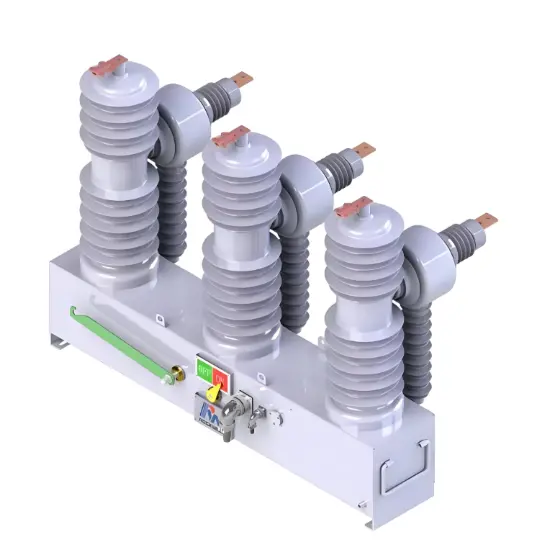 MV outdoor Three phase Smart recloser/reclosure Source Manufacturer 12kV-15kVThe RCW series automatic circuit reclosers can use on overheaddistribution lines as well as distribution substation applications for all voltage classes 11kV up to 38kV at 50/60Hz power system. and it’s rated current can reach 1250A.The RCW series automatic circuit reclosers integrates the functions of control, protection, measurement, communication, fault detection, on-line monitoring of closing or opening.The RCW series vacuum recloser is mainly combined with integration terminal, current tr
 -
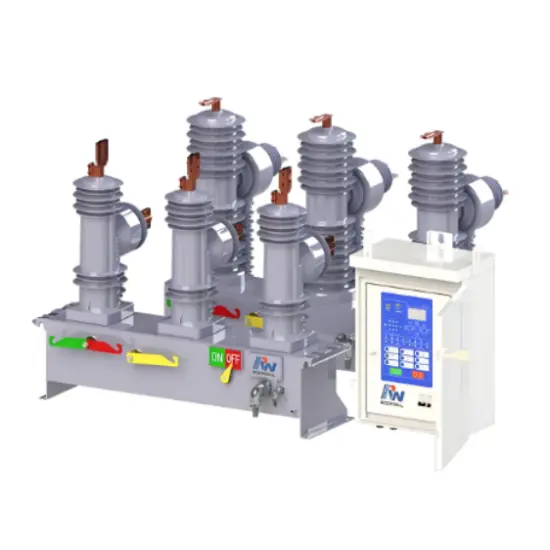 Three-phase Smart Vacuum recloser/reclosure with Controller-27kVRockwill RCW series automatic circuit reclosers are designed for overhead distribution lines and distribution substations, providing reliable fault interruption and automatic reclosure to minimize outage time. Integrating control, protection, measurement, communication, fault detection, and real-time monitoring of closing and opening operations, they deliver a comprehensive distribution automation solution. Built around an integration terminal, current transformer, permanent magnetic actuator, a
Reference Projects
-
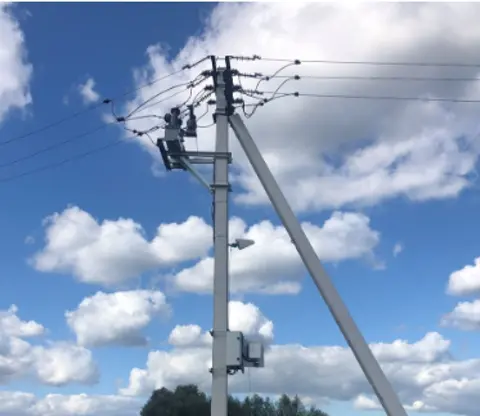 DTEK Grid Upgrade: Operation of Rockwill 10kV Smart Recloser in -40°C Extreme Cold Environment Ukraine Case StudyAs a benchmark for Chinese‑manufactured medium‑voltage distribution equipment going global, Rockwill established in‑depth cooperation with DTEK Kyiv Power Grid, Ukraine. Tailored outdoor vacuum recloser solutions were mass‑deployed to address existing weaknesses in local 10 kV distribution networks, comprehensively improving regional power supply reliability and automation to build a flagship distribution grid modernization project in Kyiv.01 Project Background: Core Pain Points of DTEK Kyiv Dis
 -
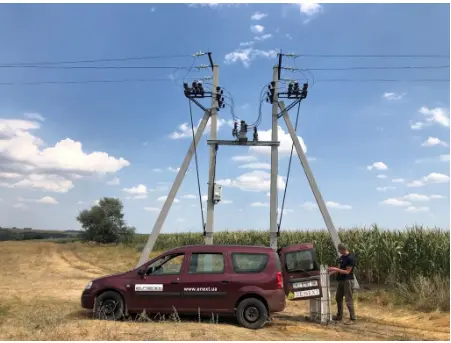 Rockwill Ukraine 186 Units 12kV Outdoor Vacuum Recloser Project Success CaseIn response to the operational characteristics of Ukraine’s local power grid and targeting harsh high-latitude outdoor working conditions, we rely on core technologies of intelligent reclosing and self-healing to precisely adapt to the complex grid environment with frequent thunderstorms and drastic diurnal temperature variations, steadily promoting the automatic and intelligent upgrade of regional rural power grids and suburban distribution networks.01 Project Overview1.1 Project BackgroundIn 2
 -
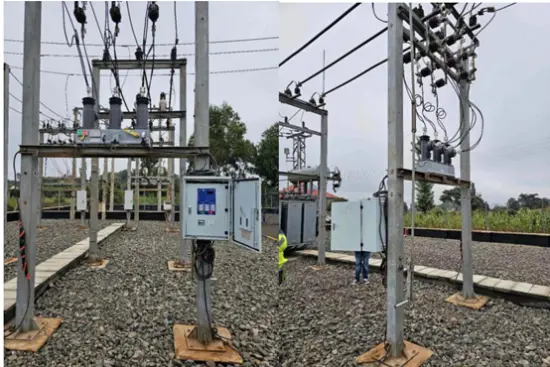 Successful Case of 170 Sets of 11kV Automatic Recloser Project in KenyaAgainst the backdrop of quality upgrading for Kenya’s urban and rural power grids, 11kV auto-reclosers deliver reliable performance to suit local climates and grid conditions. It enables rapid fault isolation and efficient operation and maintenance, forming a core safeguard for the upgrading of Kenya’s urban and rural distribution networks.01 Project Overview1.1 Project BackgroundIn May 2023, 170 sets of 11kV Automatic Reclosers (Model: RCW12M) were officially supplied and applied to the medium-
 -
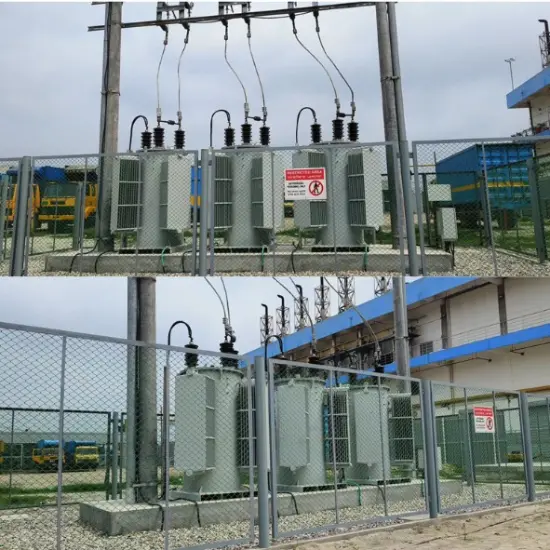 Successful Case of 263 Units of 33kV Oil-immersed 32-step Voltage Regulator Controller Project in BangladeshSuccessful Case of 263 Units of 33kV Oil-immersed 32-step Voltage Regulator Controller Project in Bangladesh01 Overall Project Overview1.1 Project BackgroundIn June 2024, 263 units of 33kV oil-immersed 32-step voltage regulator controller were officially delivered and applied to the Bangladesh Medium Voltage Distribution Network Upgrade Project. R&D and manufactured by Rockwill, these devices are used for voltage stability regulation, load fluctuation adaptation and power supply quality impr