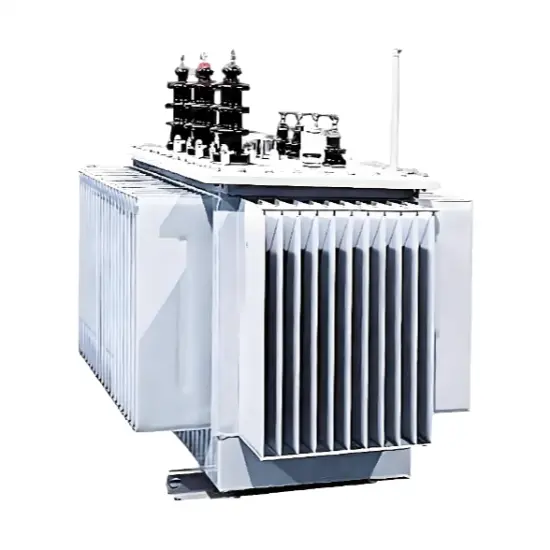
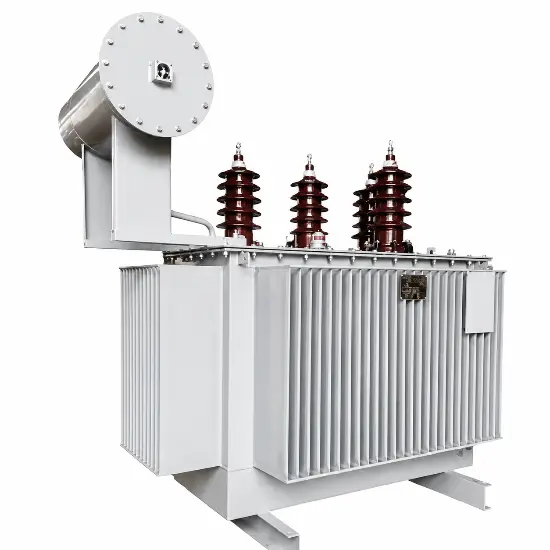
Three phase Oil Immersed Grounding /Earthing Transformer Manufacturer 22kV 30kV 33kV 66kV
Key attributes
| Brand | ROCKWILL |
| Model NO. | Three phase Oil Immersed Grounding /Earthing Transformer Manufacturer 22kV 30kV 33kV 66kV |
| Rated voltage | 33kV |
| Phases | Three-phase |
| Frequency range | 50/60Hz |
| Series | JDS |
Description
Product Overview
With decades of deep expertise in the field of grounding transformers, we have achieved a full-chain closed loop from core technological breakthroughs to industrial application. Driven by an uncompromising pursuit of reliability and stability, we consistently deliver industry benchmark products, serving as a steadfast supporter and standard leader for the high-standard construction of power grids.
This series of three-phase oil-immersed grounding transformers is specifically designed for medium- and high-voltage power grids with ungrounded or low-current grounded neutral points, covering voltage classes from 22kV to 66kV. Featuring a fully sealed oil-immersed structure, it offers high reliability, strong overload capacity, and long service life. By constructing an artificial neutral point and managing ground fault currents, the product effectively suppresses system overvoltage, enhances the safety and stability of continuous power supply in grids, and is suitable for critical applications such as substations, new energy power stations, and industrial power distribution.
Product Highlights
Premium Core:The transformer core is made of high-quality cold-rolled oriented silicon steel sheets with 45° full diagonal joints. The iron yoke is securely clamped with through bolts, and the core columns are tied with fiberglass tape. The core surface is coated with silicone resin adhesive for moisture protection and noise reduction.
Superior Winding:The windings are constructed with high-quality copper conductors in a segmented cylindrical structure to enhance interlayer insulation. Vacuum drying technology is applied to ensure excellent electrical performance, high mechanical strength, and minimal partial discharge.
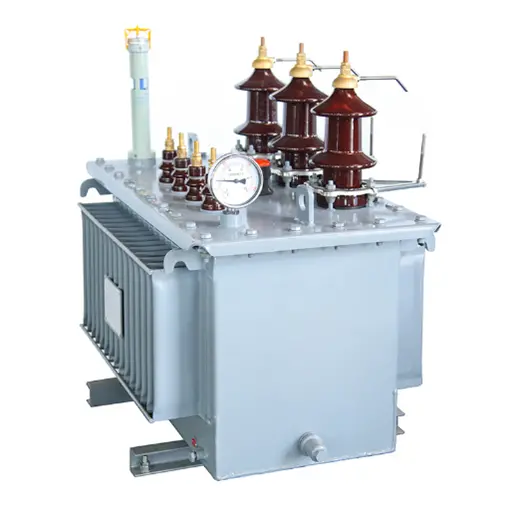
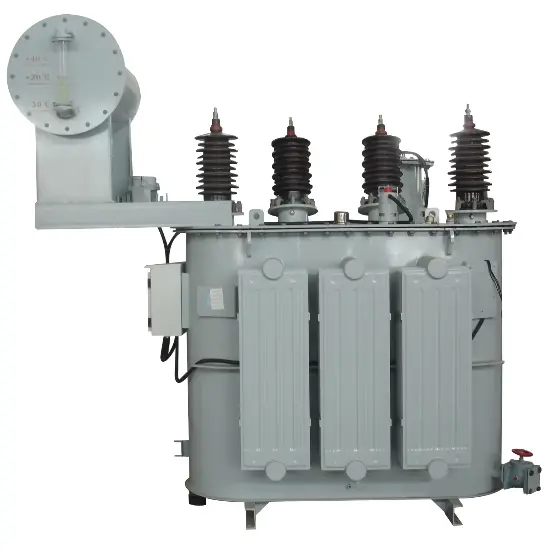
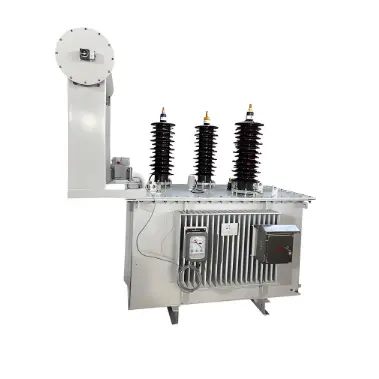
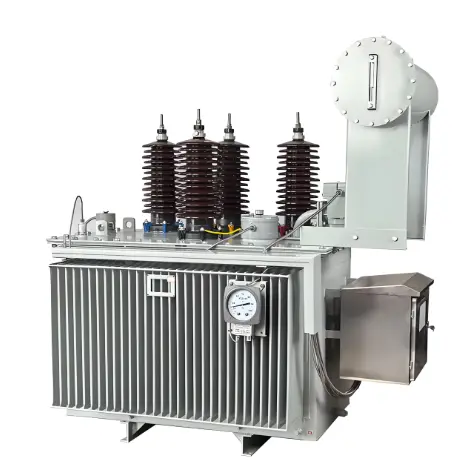
Advanced Insulation and Cooling:The oil immersed grounding transformer features a fully sealed tank with corrugated fins for efficient heat dissipation, eliminating the need for an oil storage tank. Oil tanks are sealed with oil-resistant rubber strips to prevent contact with air, preserving the insulating oil quality and extending transformer lifespan. Compact footprint, aesthetic appearance, and maintenance-free design are key benefits.
Comprehensive Protection Devices:Equipped with pressure relief valves, gas relays, and oil level gauges for real-time monitoring of oil condition. Temperature control devices support remote transmission, allowing convenient supervision of transformer operating temperature.
Key Specifications
Some of these earthing transformers cover voltage levels including:3.3kV / 6kV / 11kV / 15kV / 20kV / 22kV / 30kV / 33kV / 34.5kV / 36kV / 44kV / 66kV / 88kV / 110kV / 132kV / 145kV / 150kV / 220kV / 275kV / 330kV / 400kV, etc. The current withstand time ranges from 1s, 2s, 3s, 5s, 6s, 8s, 9s, 10s, 30s, 60s, 1hour to 2hours, and customization is available.
Parameter |
Specification |
Installation |
Fixed |
Structure |
Cabinet |
Rated Voltage |
22kV 30kV 33kV 66kV |
Frequency |
50/60Hz |
Rated Short Circuit Power (kVA) |
Approx. 15,240 |
Rated Continuous Neutral Current (A) |
24.8 |
Rated Short Time Neutral Current (A) |
>800 |
Rated Short Time Duration (s) |
20 |
Vector Group |
Zig-Zag |
Packaging |
Naked |
Origin |
China |
Production Capacity |
100 sets/month |
HS Code |
8537209000 |
Technical Parameters
Transformer Type: Oil Immersed
Connection Groups: ZN (Zigzag)
Rated Voltage: 36kV
Rated Current: 3000A
Short Time Duration: 10s / 30s / 60s or customized
Cooling Method: ONAN, ONAF, AN, AF
Installation: Indoor / Outdoor
Ambient Temperature Range: -40℃ ~ +40℃
Standards Compliance: IEC 60076-6, IEC 60076-1, IEEE
Enclosure Options: Transformer cabinet with customizable IP ratings, optional CT, VT, and isolation switch
Notes
Neutral short time current I0 = IG
Neutral zero-sequence impedance Z0 = Phase impedance / 3
±5% off-load tap changer
Confirm Z0 value before production if not self-limiting
Z0 tolerance ≤10%
Rockwill 33kV Oil Immersed Grounding Transformers combine advanced engineering and strict quality control to deliver dependable grounding solutions for power networks worldwide. For inquiries and customization, please contact us.
FAQ for Earthing Transformer
Its loss characteristics are highly related to operating characteristics: ① No-load loss refers to the iron loss (core hysteresis and eddy current loss) during normal operation. Due to long-term no-load/light load status, it is the main operating loss; ② Load loss refers to the copper loss (winding resistance loss) during faults, which is only generated during short-time faults and accounts for a very low proportion. The impact on operating costs needs to be divided by scenarios: For low-voltage and medium-voltage distribution networks (earthing transformers operate for a long time), the impact of no-load loss is obvious, and models with low no-load loss (such as national standard level 1 energy efficiency) should be preferred during selection; for high-voltage/extra-high voltage systems (earthing transformers work for a short time during faults), the proportion of no-load loss is small, and fault tolerance performance can be prioritized. Overall, its annual loss is much lower than that of ordinary power transformers, and the operating cost is relatively low
Extreme environments require targeted enhanced design, with specific measures as follows: ① High temperature environment (such as desert areas): For oil-immersed type, ONAF/OFAF forced cooling method is selected to improve heat dissipation capacity; for dry-type, high-temperature resistant insulation materials (temperature resistance grade ≥ F grade) are used, and heat dissipation air ducts are added; ② Low temperature environment (such as frigid areas): For oil-immersed type, low-freezing point insulation oil (freezing point ≤ -45℃) is selected, and oil heating devices are configured; for dry-type, thermal insulation casings are added to avoid winding condensation; ③ High altitude environment (altitude > 1000m): Insulation strength attenuates with the increase of altitude, so the insulation margin needs to be improved (such as 20% improvement in insulation strength at an altitude of 2000m); for oil-immersed type, the oil level monitoring threshold needs to be adjusted to adapt to pressure changes; the cooling system needs to optimize the fan speed to compensate for the decrease in air heat dissipation efficiency.
-
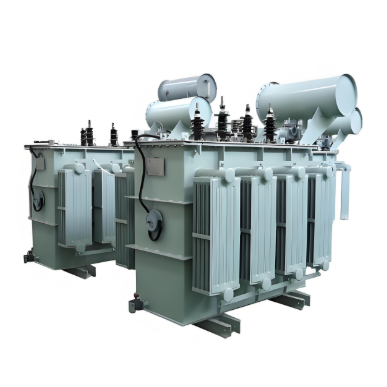
15kV 20kV 22kV 30kV 33kV 35kV oil-immersed neutral grounding resistance to transformer (earthing transfoemer)
-
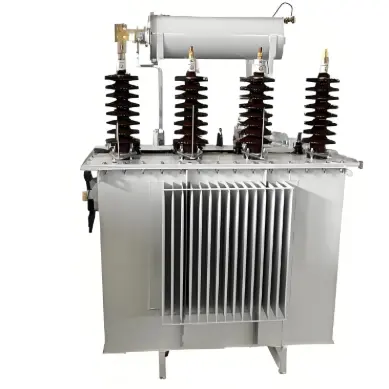
Three phase Oil Immersed Grounding /Earthing Transformer Manufacturer 22kV 30kV 33kV 66kV
-
Three Phase Zig-Zag Type Oil-Immersed Earthing Transformer source manufacturer 34.5kV 35KV 88kV 110kV
-
Three Phase Oil-Immersed Neutral Earthing Transformer Custom Factory 20kV 44kV 145kV 150kV
-
Customization 15kV 30kV 33kV 34.5kV 36kV Three Phase Neutral Grounding/earthing Transformer direct supply
-
Customization Three - phase 11kV 20kV 22kV 30kV grounding/earthing transformers Original Manufacturer
-
Three Phase Z-type winding Oil-Immersed Earthing Transformer source manufacturer 10kV-35kV
-
Single Phase Compact Oil Immersed Power Distribution Transformer 11kV
-
Single Phase Oil Immersed Power Distribution Transformer1250kVA/20kV
-
Oil-immersed amorphous alloy distribution transformer 35kV