Revolutionizing Outdoor High-Voltage Grid Protection over Conventional Breakers-- Reclosers
Ⅰ. Core Functional Positioning Differences
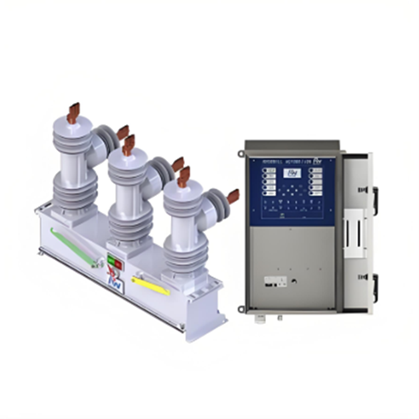
1. Recloser: Intelligent Self-Healing Switch
Essence: Integrates arc-extinguishing system, operating mechanism, and intelligent control unit. Capable of autonomous fault detection → tripping → time-delayed reclosing → locking.
Core Advantages:
Programmable Operation Sequences: Supports customizable sequences (e.g., "one fast + three delayed" or "two fast + two delayed") to distinguish transient/permanent faults. Example: First fast trip clears transient faults; subsequent delayed trips coordinate with fuses.
No External Control: Built-in current transformers (CTs) and microprocessors directly use line current for power, operating independently without relay protection panels.
2. Outdoor High Voltage Circuit Breaker: Basic Interruption Device
Essence: Solely tasked with short-circuit current interruption, relying on external relays for control logic.
Limitations:
Fixed operation sequences (e.g., "trip → 0.3s → close-trip → 180s → close-trip"), unable to adapt to complex distribution network protection.
Requires control cabinets and DC power sources, increasing system complexity and cost.
II. Core Advantages of Reclosers
1. High Integration & Intelligence
Self-Contained Control: Embedded current detection, logic judgment, and line-powered operation enable full automation, minimizing manual intervention.
Advanced Protection Algorithms:
Inverse-time characteristic curves precisely match fuse ampere-second characteristics for optimized coordination.
Optional zero-sequence CT modules enhance ground fault detection accuracy.
2. Leap in Power Supply Reliability
Multi-Reclosing Mechanism: 3–4 reclosing attempts (e.g., "one fast + three delayed") restore 80% of transient faults on first attempt.
Rapid Fault Isolation: With sectionalizers, locates and isolates faults in ≤30s, reducing outage scope by 70%+.
Backfeed Prevention: Tie recloser (QR0) delay-closing logic avoids reverse power flow during substation maintenance.
3. Cost Efficiency & Deployment
40% Lower TCO:
Eliminates relay protection panels, DC screens, and switchroom space.
Pole-mounted installation (200–300 lbs) vs. breakers requiring 1,800–3,000 lbs + concrete foundations.
3× Longer Maintenance Cycles:
Vacuum/SF₆ types endure 10,000 operations; maintenance every 3–5 years vs. frequent spring-mechanism repairs in breakers.
4. Extreme Environment Adaptability
Enhanced Weather Resistance:
Three-phase common tank (SF₆-insulated) tolerates -40°C to 40°C.
Epoxy-encapsulated split-phase design suits mines/coastal areas.
Topology Flexibility:
Single-phase units for rural branches; three-phase assemblies resolve neutral grounding issues.
III. Key Parameter Comparison
Characteristic |
Recloser |
Outdoor HV Circuit Breaker |
Advantage |
Rated Current |
400–1200A (630A mainstream) |
1200–3000A |
More economical for light loads |
Short-Circuit Breaking Capacity |
≤16kA (high-end: 25kA) |
20–40kA |
Meets most branch-line needs |
Operation Sequence |
Programmable (e.g., two fast + two delayed) |
Fixed standard sequence |
Adapts to protection strategies |
Control Dependency |
Self-contained (IED-operated) |
Requires external relays |
Simplified system architecture |
Installation |
Pole-mounted |
Ground frame structure |
Space-saving, rapid deployment |
IV. Typical Applications
Rural/Mountainous Networks:
Segments long overhead lines (e.g., 10kV radial feeders), replacing "breaker + protection panel" setups.
Urban Grid Automation:
Ring Main Unit (RMU) nodes (QR0 enables automatic load transfer) with FTU for "three-remote" control.
Special Sites: Oilfields/mines (corrosion-resistant design + anti-theft password function).
V. Limitations & Solutions
Breaking Capacity Limit: Use circuit breakers for short-circuit currents >16kA.
Ungrounded Systems: Add zero-sequence CTs to improve single-phase ground fault detection.
Deployed Equipment
-
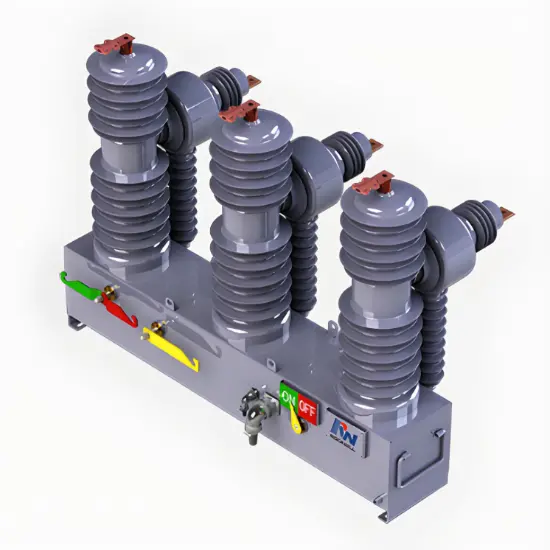 Outdoor Pole Mounted Recloser (Reclosure) China Manufacturer-38kVAs a pioneering Chinese manufacturer of reclosers, we leverage decades of R&D expertise to set industry benchmarks, operate a fully autonomous production system, and deliver reliable solutions for power grid projects.The RCW series automatic circuit recloser is specifically designed for 38kV overhead distribution lines and substation applications in 50/60Hz power systems. It integrates control, protection, measurement, communication, fault detection, and online monitoring of switching status
Reference Projects
-
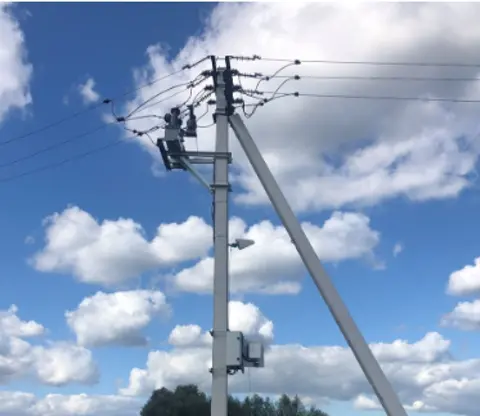 DTEK Grid Upgrade: Operation of Rockwill 10kV Smart Recloser in -40°C Extreme Cold Environment Ukraine Case StudyAs a benchmark for Chinese‑manufactured medium‑voltage distribution equipment going global, Rockwill established in‑depth cooperation with DTEK Kyiv Power Grid, Ukraine. Tailored outdoor vacuum recloser solutions were mass‑deployed to address existing weaknesses in local 10 kV distribution networks, comprehensively improving regional power supply reliability and automation to build a flagship distribution grid modernization project in Kyiv.01 Project Background: Core Pain Points of DTEK Kyiv Dis
 -
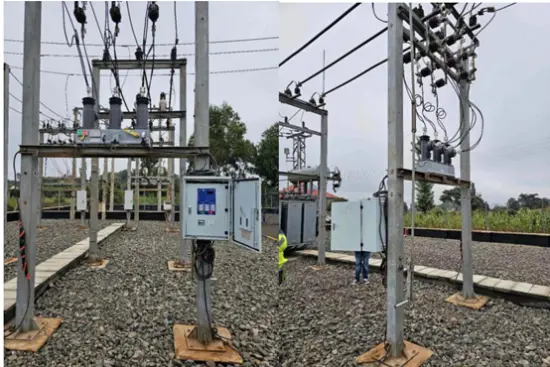 Successful Case of 170 Sets of 11kV Automatic Recloser Project in KenyaAgainst the backdrop of quality upgrading for Kenya’s urban and rural power grids, 11kV auto-reclosers deliver reliable performance to suit local climates and grid conditions. It enables rapid fault isolation and efficient operation and maintenance, forming a core safeguard for the upgrading of Kenya’s urban and rural distribution networks.01 Project Overview1.1 Project BackgroundIn May 2023, 170 sets of 11kV Automatic Reclosers (Model: RCW12M) were officially supplied and applied to the medium-
 -
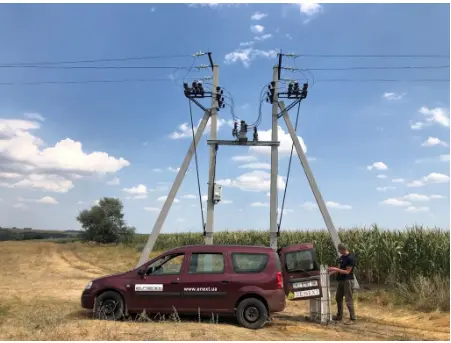 Rockwill Ukraine 186 Units 12kV Outdoor Vacuum Recloser Project Success CaseIn response to the operational characteristics of Ukraine’s local power grid and targeting harsh high-latitude outdoor working conditions, we rely on core technologies of intelligent reclosing and self-healing to precisely adapt to the complex grid environment with frequent thunderstorms and drastic diurnal temperature variations, steadily promoting the automatic and intelligent upgrade of regional rural power grids and suburban distribution networks.01 Project Overview1.1 Project BackgroundIn 2