Why 12kV Vacuum Circuit Breakers Outperform SF6/Oil/Air: A Total Solution Analysis
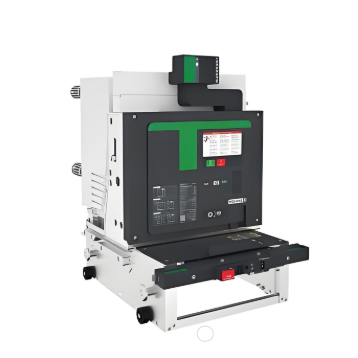
In medium-voltage (MV) power distribution, particularly within 12kV indoor switchgear, vacuum circuit breakers (VCBs) have emerged as the dominant technology, significantly surpassing historical alternatives such as SF₆ circuit breakers, minimum-oil circuit breakers, and air circuit breakers. This report provides a detailed comparison of 12kV indoor VCBs against these competitors, highlighting their core advantages.
I. Core Competing Technologies Overview
SF₆ Circuit Breakers
Principle: Uses sulfur hexafluoride (SF₆) gas for arc quenching and insulation. SF₆ offers excellent dielectric and arc-extinguishing properties.
Application: Once widely used in MV/HV systems, especially for high-breaking-capacity or outdoor applications. However, its market share in 12kV indoor systems has been largely replaced by VCBs due to environmental and maintenance concerns.
Minimum-Oil Circuit Breakers
Principle: Employs transformer oil as the arc-quenching medium but uses significantly less oil than earlier bulk-oil designs.
Application: A mainstream technology before VCBs. Key drawbacks include fire hazards, high maintenance, and environmental pollution.
Air Circuit Breakers
Principle: Relies on compressed air blasts to extinguish arcs.
Application: Used in early HV systems or niche applications. For 12kV indoor scenarios, ACBs are inferior to VCBs in breaking capacity, size, and noise.
II. Core Advantages of 12kV Indoor VCBs
VCBs outperform competitors across six critical dimensions:
Superior Arc Quenching & Reliability
Vacuum Interruption: Vacuum is an ideal insulating medium. Arc extinction occurs efficiently at current zero in a sealed interrupter, with rapid dielectric recovery. This ensures high reliability, especially for frequent operations.
No Reignition Risk: Unlike SF₆ or oil, vacuum interruption virtually eliminates reignition.
High Breaking Capacity: Modern 12kV VCBs cover a broad range of rated short-circuit breaking currents (Isc), from 20kA to 50kA+ (e.g., ZN63/VBY-12: 40kA; VS1-12: 50kA), matching SF₆ CBs and exceeding oil/ACBs.
Long Electrical Life: Endures 30–50 full-capacity short-circuit interruptions (e.g., VT19-12, VS1-12), meeting E2 class requirements and outperforming oil CBs.
Environmental & Safety Excellence
Zero GHG Emissions: VCBs use vacuum instead of SF₆—a potent greenhouse gas with a GWP ~23,500× CO₂—eliminating regulatory and disposal challenges.
No Fire Risk: Unlike oil-based CBs, vacuum interrupters pose no fire or explosion hazards.
Non-Toxic Operation: Generates no toxic byproducts during interruption (unlike SF₆ decomposition).
Minimal Maintenance & Longevity
"Maintenance-Free" Design: Sealed vacuum interrupters require no internal maintenance during their lifespan (typically matching mechanical durability). This contrasts sharply with SF₆ CBs (gas monitoring/replenishment) and oil CBs (oil replacement).
High Mechanical Life: Spring-operated mechanisms achieve 10,000–30,000 operations (M2 class), reducing mechanical upkeep.
Solid Insulation: Technologies like epoxy-encapsulated poles (e.g., VS1-12) enhance resistance to dust, moisture, and condensation.
Compact Design & Flexibility
Small Footprint: Compact vacuum interrupters and optimized mechanisms enable space-efficient designs.
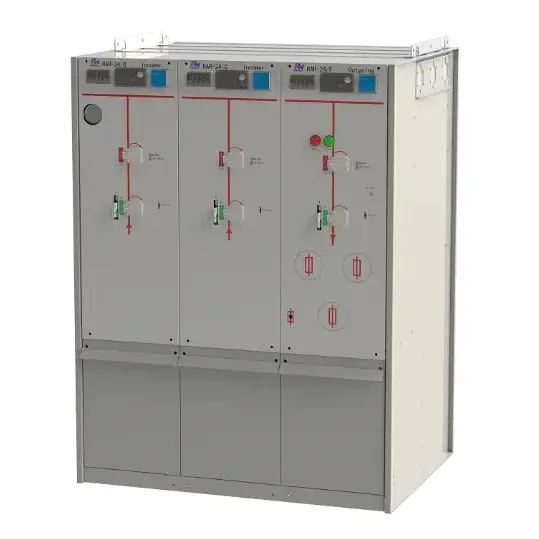
Installation Versatility: Integrated operating mechanisms support fixed or withdrawable configurations (e.g., for KYN28A-12/GZS1, XGN switchgear).
Modularity: Simplified assembly and component replacement.
Advanced Interruption & Cost Efficiency
Low Chopping Current: Minimizes switching overvoltage during inductive current interruption.
C2-Class Capacitive Switching: Ultra-low restrike probability for capacitor banks.
Low TCO: While initial costs may align with SF₆ CBs, VCBs offer lower lifetime costs due to minimal maintenance, no SF₆ handling fees, reduced insurance premiums (no fire risk), and extended service life.
Environmental Resilience
Operates reliably in standard conditions (-15°C to +40°C, ≤1,000m altitude). Solid-insulation variants tolerate harsh environments (e.g., high humidity, pollution).
III. Comparative Summary
Table: 12kV Indoor VCB vs. Key Competitors
| Feature | VCB | SF₆ CB | Min-Oil CB | Air CB |
|---|---|---|---|---|
| Arc Medium | Vacuum | SF₆ gas | Transformer oil | Compressed air |
| Key Strength | Reliability, maintenance-free, eco-friendly, compact, long life | High breaking capacity, insulation | Mature (historical) | No fire risk |
| Key Weakness | Chopping overvoltage (manageable) | High-GWP gas, complex maintenance | Fire risk, frequent upkeep, pollution | Large size, noise, limited breaking capacity |
| Breaking Capacity (Isc) | High (20kA–50kA+) | High | Medium | Low/Medium |
| Electrical Life | High (30–50 operations) | Medium/High | Low | Medium |
| Mechanical Life | High (10k–30k operations) | Medium/High | Low | Medium |
| Maintenance | Very low | High (gas monitoring) | High (oil changes) | Medium (air system) |
| Eco-Friendliness | Excellent (zero emissions) | Poor (SF₆ GWP) | Poor (oil pollution) | Medium (noise) |
| Fire/Explosion Risk | None | Low (SF₆ non-flammable) | High | None |
| Size | Compact | Medium | Large | Very large |
| TCO | Low (initial + long-term) | High (gas + compliance costs) | Medium/High (upkeep + risk) | Medium/High |
| Market Trend | Dominant for 12kV indoor | Phasing out of MV indoor | Obsolete | Niche applications |
IV. Conclusion
For 12kV indoor power distribution, vacuum circuit breakers (VCBs) are the unequivocal technology of choice. Their superior arc quenching, unmatched reliability, true maintenance-free operation, environmental safety (no SF₆/oil/fire risks), compact design, and lifetime cost efficiency have solidified their dominance in modern electrical infrastructure.