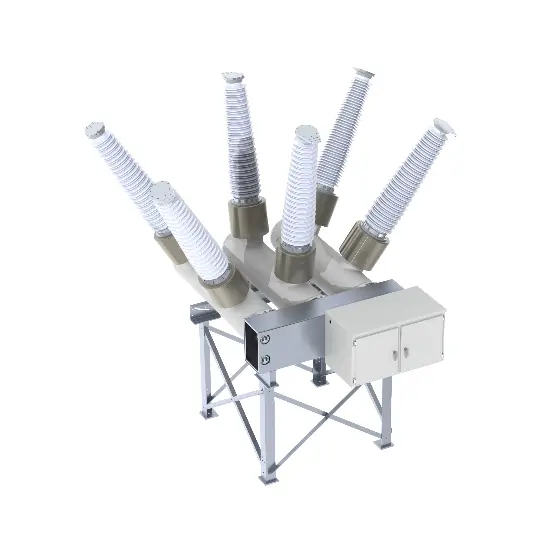
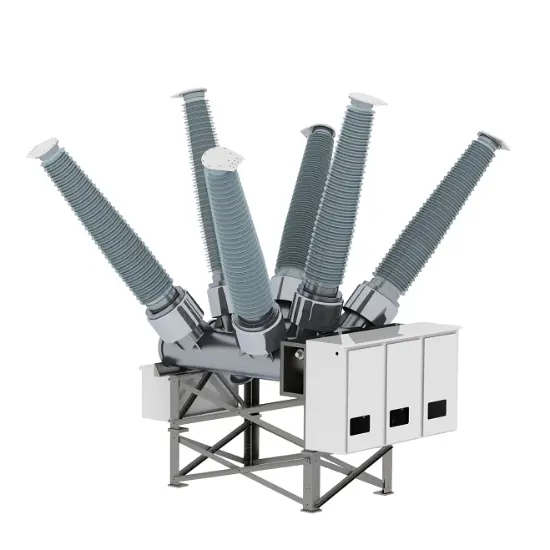
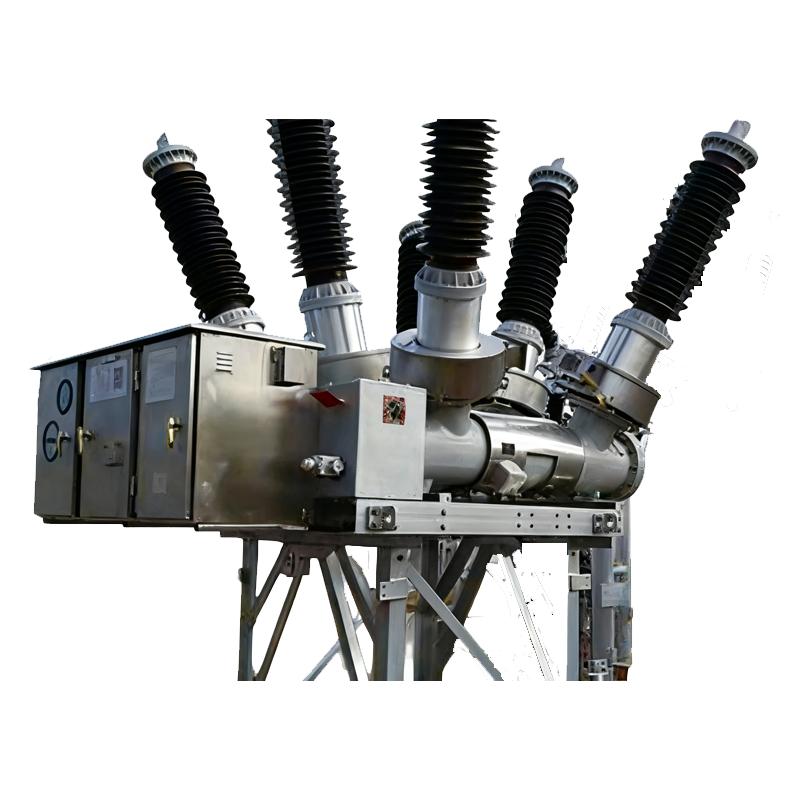
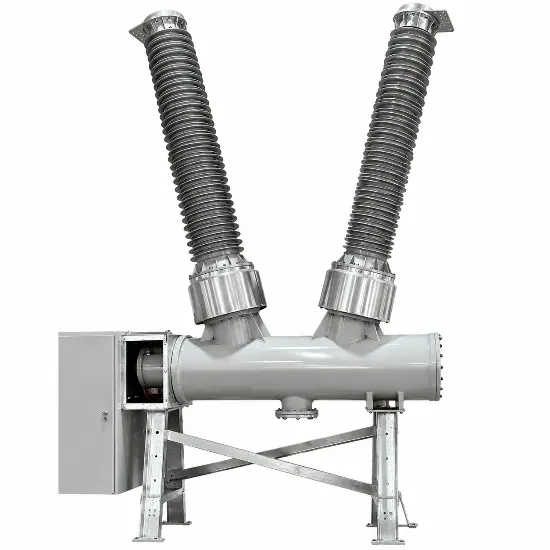
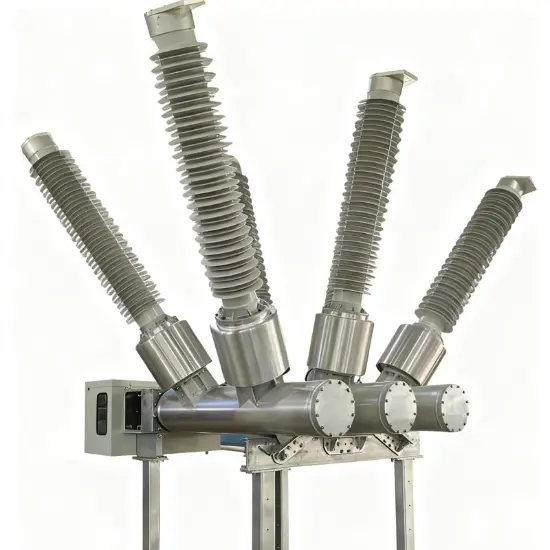
Outdoor Dead Tank SF6 Circuit Breaker direct supply 362kV
Key attributes
| Brand | ROCKWILL |
| Series | RHD |
| Rated maximum voltage | 362kV |
| Rated maximum current | 3150~5000 A |
| Lightning impulse withstand voltage | 1175/1290 kV |
| Rated short-circuit breaking current | 40~63 kA |
| Rated frequency | 50/60 Hz |
Description
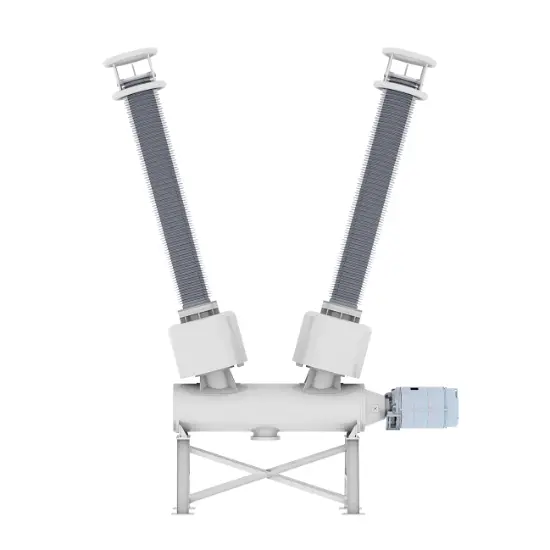
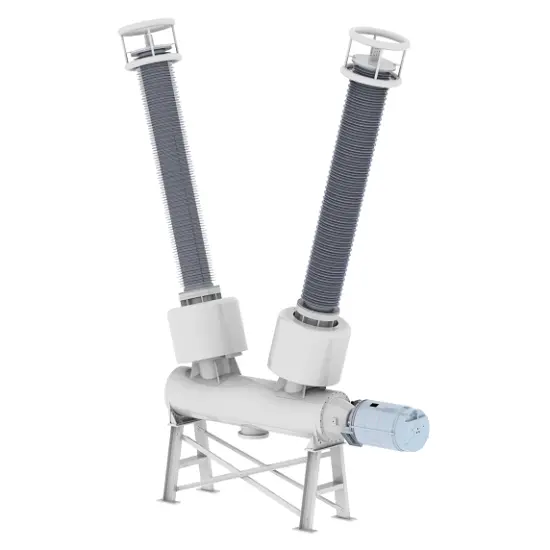
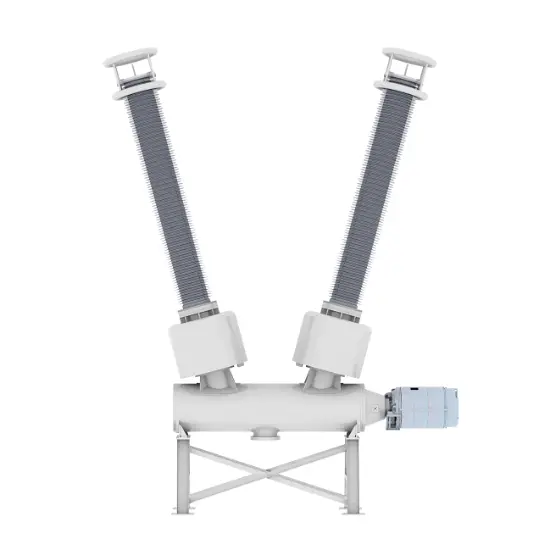
A 362kV outdoor dead tank SF6 circuit breaker featuring self-blast arc-extinguishing technology, post-type porcelain bushing assemblies, and a stored-energy spring mechanism. The design complies with IEC 62271-100 / IEEE C37.04, and applicable GB/DL standards. Customized manufacture is available to meet specific project requirements.
Product Showcase Video
Operating principle
High breaking current: Self-energy principle:
The arc combustion makes SF6 gas in the thermal expansion chamber fiercely expanding to generate gas flow blowing to nozzle to the nozzle to extinguish the arc.
Low breaking current: Puff type principle:
SF6 gas in the compression chamber is compressed to generate gas flow, blowing to the nozzle to extinguish the arc, which then extinguishes.
Basic research ability
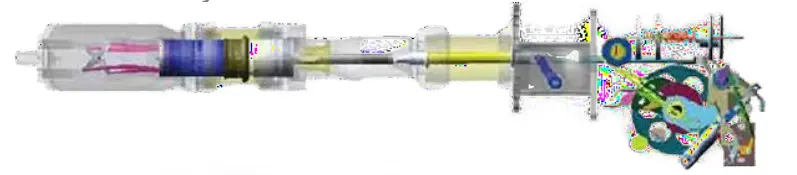
Simulation analysis of mechanism motion process of circuit breaker
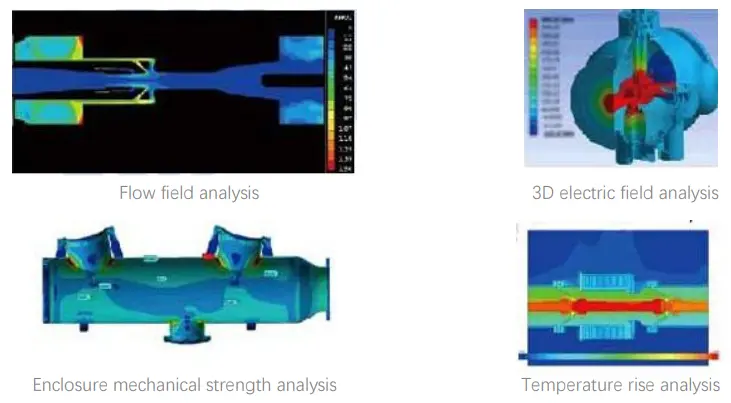
Key Design Features
- Self-Blast Arc Extinguishing:Utilizes self-energy (self-blast) arc-extinguishing principle, where arc energy generates pressure to aid interruption. This reduces operating mechanism power requirements and enhances operational reliability.
- Spring Operating Mechanism:Equipped with a stored-energy spring mechanism — simple structure, high reliability, oil-free and air-free operation. Mechanical endurance exceeds 10,000 operations, and maintenance is straightforward.
- Dual-Seal Flange Design:Flanges adopt a dual-seal structural design: the outer seal ring is water-proof and the inner seal ring is gas-proof, significantly reducing SF₆ leakage and improving outdoor long-term reliability.
- Density Monitoring:Equipped with pointer-type SF₆ density relays for continuous gas pressure and density monitoring.
- Porcelain Bushing Configuration:Single-phase or three-phase post-type porcelain bushing structure available.
Technical Parameters
|
Item |
Unit |
362 kV |
|---|---|---|
|
Rated maximum voltage |
kV |
362 |
|
Rated maximum current |
A |
3150~5000 |
|
Rated frequency |
Hz |
50/60 |
|
Lightning impulse withstand voltage |
kV |
1175/1290 |
|
Rated short-circuit breaking current |
kA |
40~63 |
|
Rated peak withstand current |
kA |
100~158 |
|
Creepage distance |
mm/kV |
25~31 |
|
Partial discharge |
pC |
≤10 |
|
Opening time |
ms |
≤30 |
|
Alarm/blocking pressure |
MPa |
0.55/0.50 |
|
Gas moisture content |
ppm(v) |
≤150 |
|
Heater voltage |
V |
AC220 |
|
Voltage of energy-store motor |
V |
DC110/220 |
|
1min Power frequency withstand voltage |
kV |
510/585 |
|
First open pole factor |
— |
1.3 |
|
Rated short-circuit duration |
s |
3 |
|
Rated cable/line charging breaking current |
A |
315~400 |
|
Rated making current (peak) |
kA |
100~158 |
|
Operation sequence |
— |
O-0.3s-CO-180s-CO |
External dimensions
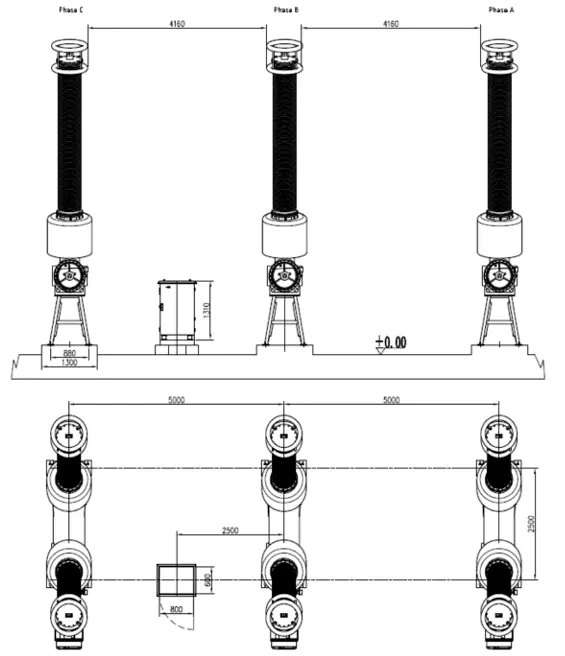
Service Environment
| Parameter | Requirement |
|---|---|
| Ambient Temperature | –40°C to +55°C |
| Relative Humidity | Daily avg ≤95%, monthly avg ≤90% |
| Wind Pressure | ≤700 Pa |
| Altitude | Standard ≤1000m; reinforced up to 3000m available |
| Earthquake Intensity | ≤9° (Chinese scale) |
| Pollution Class | III |
- If it needs to be installed in plateau areas with an altitude higher than 1,000 meters, it is essential to consult with the manufacturer to take necessary measures to strengthen insulation during the ordering process.
- When operating in an area with a temperature of -40℃, measures need to be taken to prevent SF6 gas from liquefying.
Documentation Resource Library Dead Tank Circuit Breaker
FAQ for Dead Tank Circuit Breaker
During the normal operation and interruption processes of a circuit breaker, SF₆ gas can decompose, producing various decomposition products such as SF₄, S₂F₂, SOF₂, HF, and SO₂. These decomposition products are often corrosive, toxic, or irritating, and therefore require monitoring.If the concentration of these decomposition products exceeds certain limits, it may indicate abnormal discharges or other faults within the arc quenching chamber. Timely maintenance and handling are necessary to prevent further damage to the equipment and to safeguard personnel health.
The leakage rate of SF₆ gas must be controlled at an extremely low level, typically not exceeding 1% per year. SF₆ gas is a potent greenhouse gas, with a greenhouse effect 23,900 times that of carbon dioxide. If a leak occurs, it can not only cause environmental pollution but also lead to a decrease in the gas pressure within the arc quenching chamber, affecting the performance and reliability of the circuit breaker.
To monitor the leakage of SF₆ gas, gas leakage detection devices are typically installed on tank-type circuit breakers. These devices help to promptly identify any leaks so that appropriate measures can be taken to address the issue.
The interrupter is typically installed inside the tank, resulting in a highly compact overall structure that enables efficient arc quenching within a limited space. Depending on the arc extinguishing principle and technical approach, the specific configuration of the interrupter may vary, but all designs include core components such as moving/stationary contacts, a nozzle, and insulating parts. During opening operation to interrupt the current, these components work together to achieve fast and reliable extinction of the arc.
-
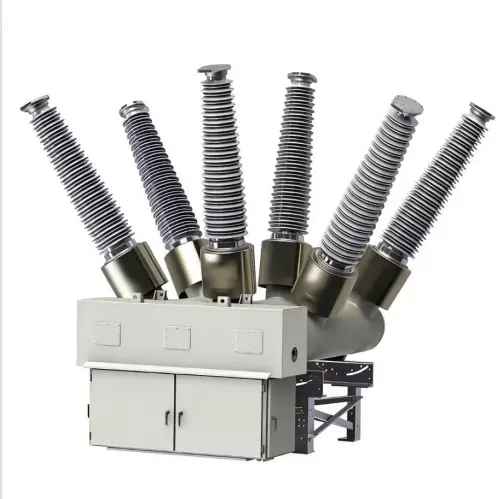
SF6 Free/Pure Air Dead tank vacuum circuit breaker 12kV-145kV
-
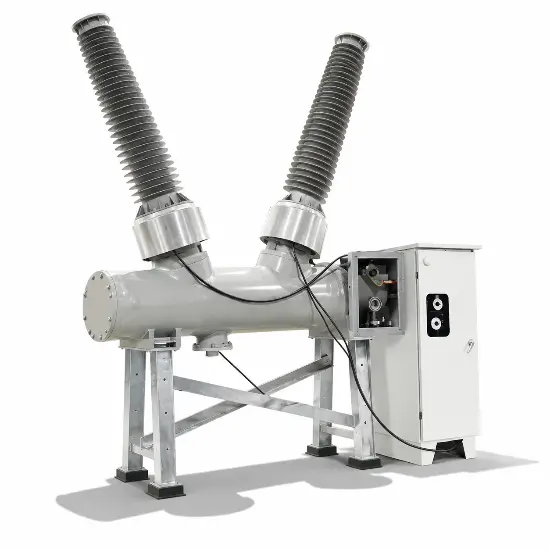
Customization Dead tank SF6 Gas Circuit-Breaker 362kV- 420kV
-
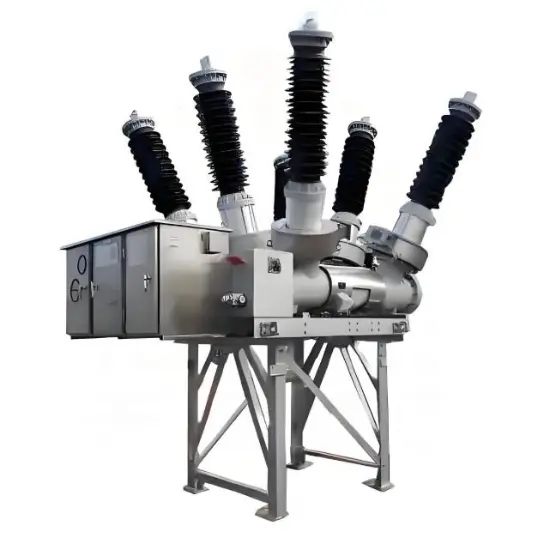
AC Dead tank SF6 circuit breaker IEC Standard -145kV 170kV
-
Outdoor Dead Tank SF6 Circuit Breaker direct supply 362kV
-
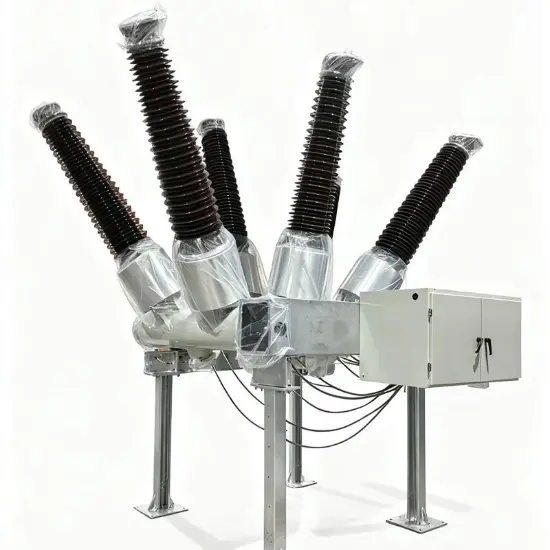
Dead Tank SF6 Gas Circuit Breaker Original Manufacturer-145kV to 170kV
-
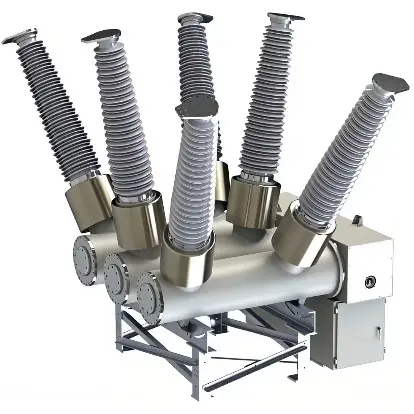
Eco‑friendly Dead Tank Vacuum Circuit Breaker(VCB)-36kV 72.5kV
-
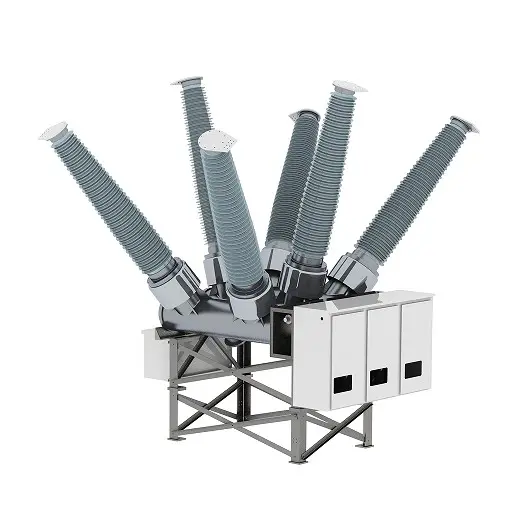
Maintenance-Free HV Dead-Tank SF6 Circuit Breaker for Large-Scale Substations-230kV to 252kV
-
Original Manufacturer Dead-Tank SF6 Circuit Breaker-170kV
-
SF6-free Dead Tank Circuit Breaker Direct Supply-72.5 kV
-
SF6-free Dead Tank Circuit Breaker manufacturer-145 kV