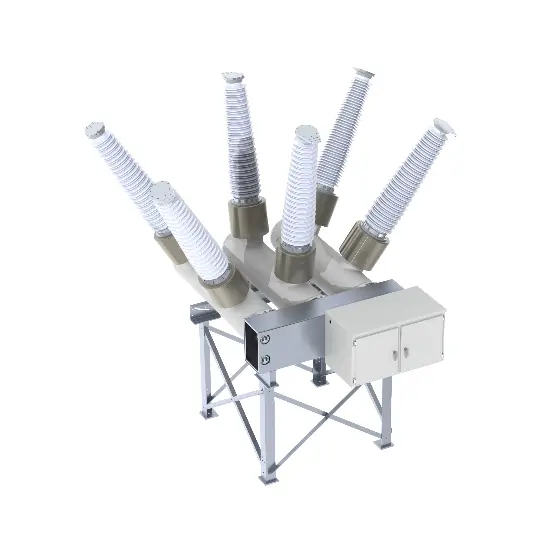
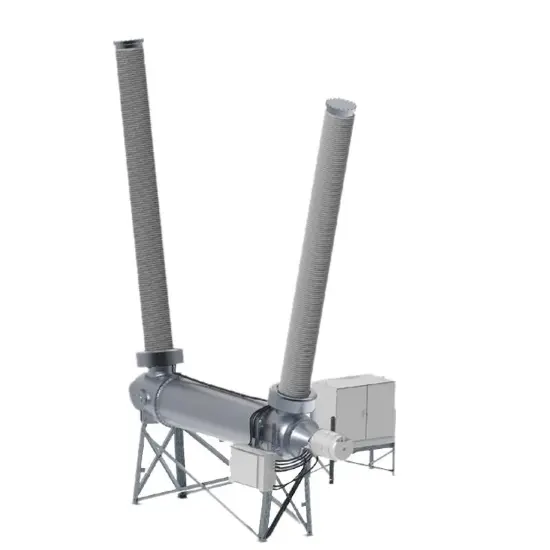
420kV Dead Tank SF6 Circuit Breaker from manufacturer
Key attributes
| Brand | ROCKWILL |
| Model NO. | 420kV Dead Tank SF6 Circuit Breaker from manufacturer |
| Rated voltage | 420kV |
| Rated normal current | 5000A |
| Rated short circuit breaking current | 63kA |
| Series | RHD |
Description
Description
In the development history of China's dead tank SF6 circuit breakers, we are undoubtedly a pioneer. As the first source manufacturer focusing on this field, decades of technological inheritance and continuous innovation have laid a solid foundation for mature manufacturing while keeping us at the forefront of R&D. With reliability exceeding market expectations, our products have become the preferred choice for numerous major power projects.
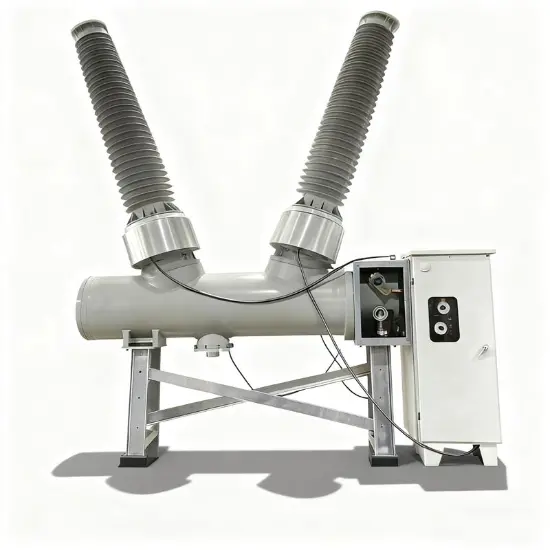
Our 420kV dead tank SF6 circuit breakers consist of line bushings, current transformers, interrupters, frames, operating mechanisms, and other components. They are used to interrupt rated currents, fault currents, or to switch transmission lines, enabling control and protection of power systems. They are widely applied in domestic and overseas power, metallurgy, mining, transportation, and public utility industries.
Main Features
-
High-Efficiency Arc Extinction & Insulation – SF6 gas provides rapid arc extinction and excellent insulation, capable of interrupting fault currents quickly to ensure stable power system operation at 420kV rated maximum voltage.
-
Robust Sealed Construction (Dead Tank) – Live parts are sealed inside an SF6-filled metal tank, isolated from the external environment, offering outstanding seismic resistance and dust protection for complex conditions.
-
Integrated Multifunctionality – Incorporation of bushings and current transformers combines current measurement, protection, and control, simplifying system configuration and improving operation and maintenance efficiency.
-
Long Life & Low Maintenance – Long mechanical and electrical service life. The sealed structure significantly reduces component aging and corrosion, lowering maintenance frequency and saving operating costs.
-
Multiple Safety Protections – Equipped with anti-misoperation interlocks and comprehensive insulation protection to prevent human error and ensure personnel and equipment safety during operation.
Technical specifications
| Parameter | Value |
|---|---|
| Rated maximum voltage | 420 kV |
| Rated maximum current | 3150~5000 A |
| Rated frequency | 50/60 Hz |
| Lightning impulse withstand voltage | 1425/1560 kV |
| Rated short-circuit breaking current | 50~63 kA |
| Rated peak withstand current | 125~158 kA |
| Creepage distance | 25~31 mm/kV |
| Partial discharge | ≤10 pC |
| Opening time | ≤30 ms |
| Alarm/blocking pressure | 0.55/0.50 MPa |
| Gas moisture content | ≤150 ppm(v) |
| Heater voltage | AC220 V |
| Voltage of energy-store motor | DC110/220 V |
| 1min Power frequency withstand voltage | 630/720 kV |
| First open pole factor | 1.3 |
| Rated short-circuit duration | 3 s |
| Rated cable/line charging breaking current | 400~500 A |
| Rated making current (peak) | 125~158 kA |
| Operation sequence | O-0.3s-CO-180s-CO |
| Breaking time | ≤60 ms |
| Closing time | ≤100 ms |
| Rated SF₆ gas pressure | 0.6~0.7 MPa |
| SF₆ annual gas leakage rate | ≤0.5% |
| Mechanical life | 10000 times |
| Voltage of control circuit | DC110/220 V |
| Applied standards | GB/T 1984-2024 / IEC 62271-100 |
Documentation Resource Library Dead Tank Circuit Breaker
FAQ for Dead Tank Circuit Breaker
Focus on three core points: First, voltage matching, which must conform to the maximum operating voltage of the system (compatibility coefficient ≤1.05); second, customization of key parameters — the break spacing of 345kV equipment is reduced by 5%-8% compared with 363kV, and the voltage equalizing capacitor of 380kV equipment is increased by 8%-10%; third, the short-circuit breaking current shall be ≥50kA, and the third-party insulation coordination test must be passed.
During the normal operation and interruption processes of a circuit breaker, SF₆ gas can decompose, producing various decomposition products such as SF₄, S₂F₂, SOF₂, HF, and SO₂. These decomposition products are often corrosive, toxic, or irritating, and therefore require monitoring.If the concentration of these decomposition products exceeds certain limits, it may indicate abnormal discharges or other faults within the arc quenching chamber. Timely maintenance and handling are necessary to prevent further damage to the equipment and to safeguard personnel health.
The leakage rate of SF₆ gas must be controlled at an extremely low level, typically not exceeding 1% per year. SF₆ gas is a potent greenhouse gas, with a greenhouse effect 23,900 times that of carbon dioxide. If a leak occurs, it can not only cause environmental pollution but also lead to a decrease in the gas pressure within the arc quenching chamber, affecting the performance and reliability of the circuit breaker.
To monitor the leakage of SF₆ gas, gas leakage detection devices are typically installed on tank-type circuit breakers. These devices help to promptly identify any leaks so that appropriate measures can be taken to address the issue.
The interrupter is typically installed inside the tank, resulting in a highly compact overall structure that enables efficient arc quenching within a limited space. Depending on the arc extinguishing principle and technical approach, the specific configuration of the interrupter may vary, but all designs include core components such as moving/stationary contacts, a nozzle, and insulating parts. During opening operation to interrupt the current, these components work together to achieve fast and reliable extinction of the arc.
-
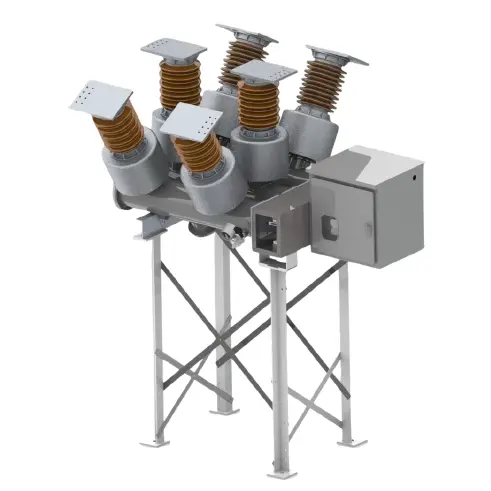
SF6 Free/Pure Air Dead tank vacuum circuit breaker 12kV-145kV
-
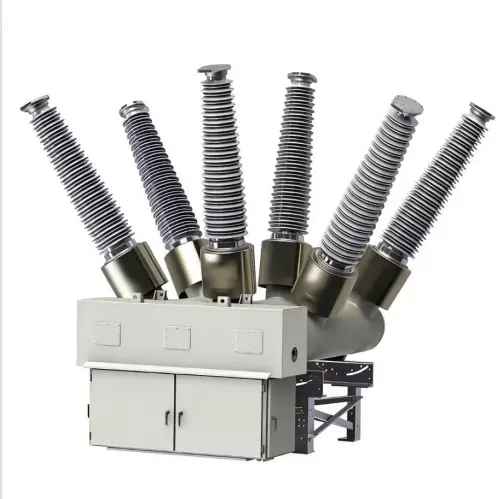
Customization Dead tank SF6 Gas Circuit-Breaker 362kV- 550kV
-
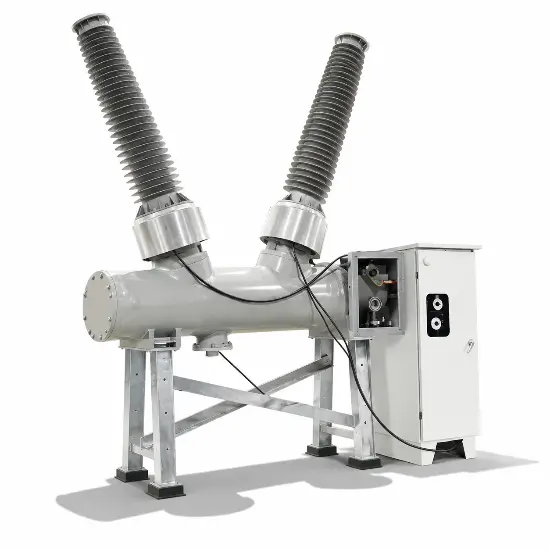
High-voltage AC Dead tank SF6 circuit breaker 145kV 170kV
-
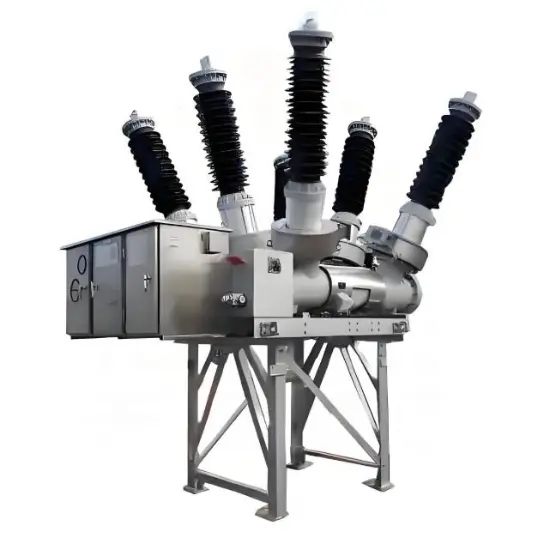
Outdoor Dead Tank SF6 Circuit Breaker direct supply 362kV
-
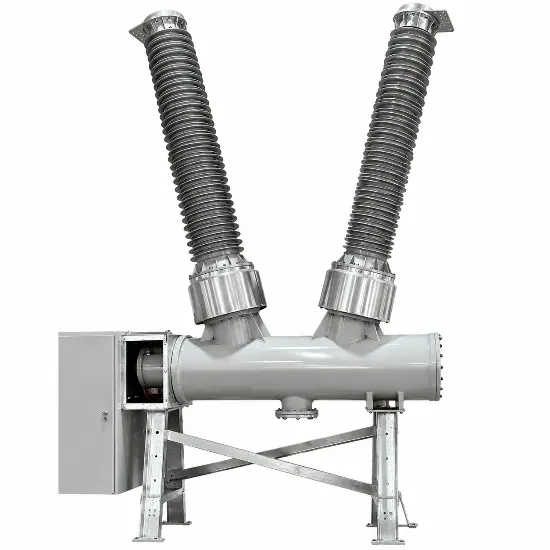
Dead Tank SF6 Circuit Breaker Original Manufacturer-115kV to 170kV
-
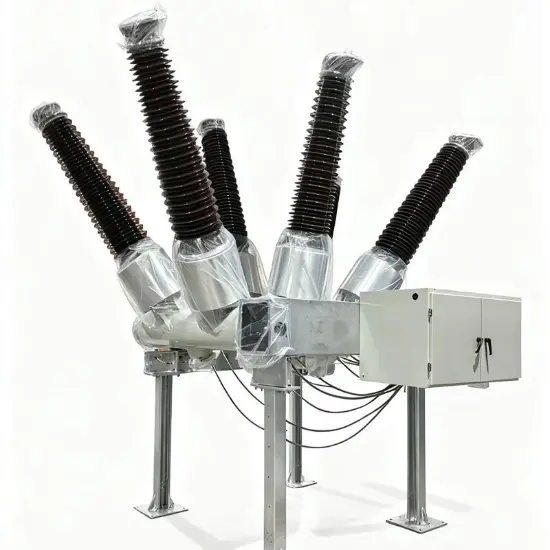
Dead Tank Vacuum Circuit Breaker(VCB)-36kV / 72.5kV
-
Maintenance-Free HV Dead-Tank SF6 Circuit Breaker for Large-Scale Substations-230kV to 252kV
-
Original Manufacturer Dead-Tank SF6 Circuit Breaker-170kV
-
SF₆-free Dead Tank Circuit Breaker-72.5 kV
-
High reliability SF6-free Dead Tank Circuit Breaker-145 kV