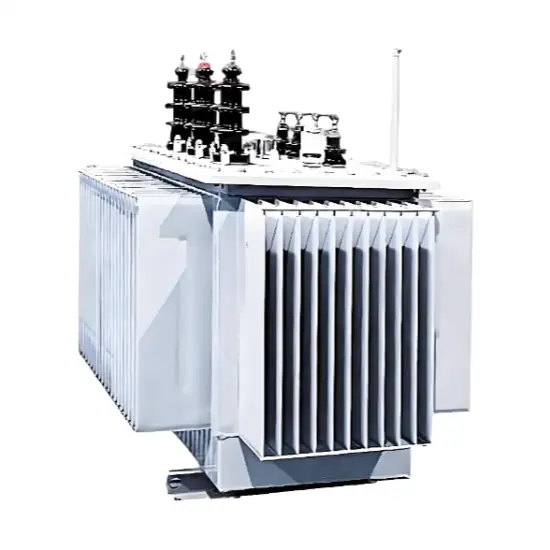
Customized Neutral Grounding Transformer Manufacturer-33kV
Key attributes
| Brand | ROCKWILL |
| Series | JDS |
| Rated voltage | 33kV |
| Rated neutral current | Up to 3000 A |
| Rated frequency | 50 / 60 Hz |
Description
Why This Transformer Fits MV Grounding Systems?
- Provides an artificial neutral point for ungrounded, impedance-grounded or delta-connected systems
- Supports stable connection of neutral grounding resistors and arc suppression coils
- Limits ground fault current to a controllable level
- Improves earth-fault detection and relay coordination
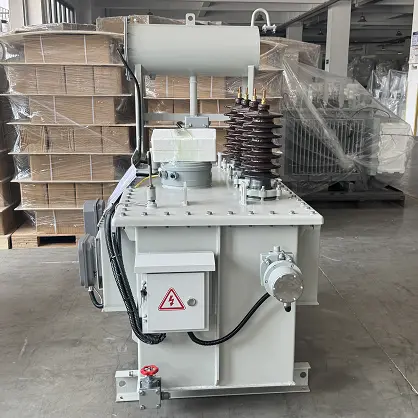
- Fully sealed oil-immersed design suitable for outdoor and long-term service
- Customizable neutral current, short-time rating and zero-sequence impedance
Typical System Benefits
| System Need | Transformer Contribution |
|---|---|
| No neutral point available | Creates a stable artificial neutral |
| High arc-grounding overvoltage risk | Provides a controlled zero-sequence path |
| Weak earth-fault protection | Enables sensitive relay operation |
| Outdoor substation installation | Sealed oil tank reduces maintenance |
| Dual-purpose requirement | Optional auxiliary winding can supply LV station service |
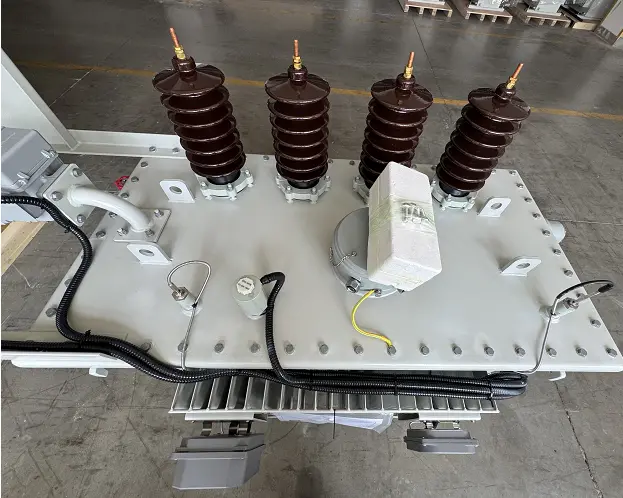
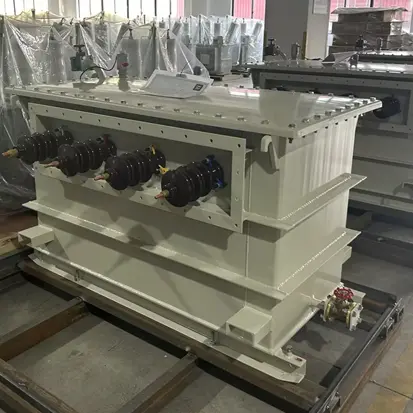
Robust Sealed Construction & Component Layout
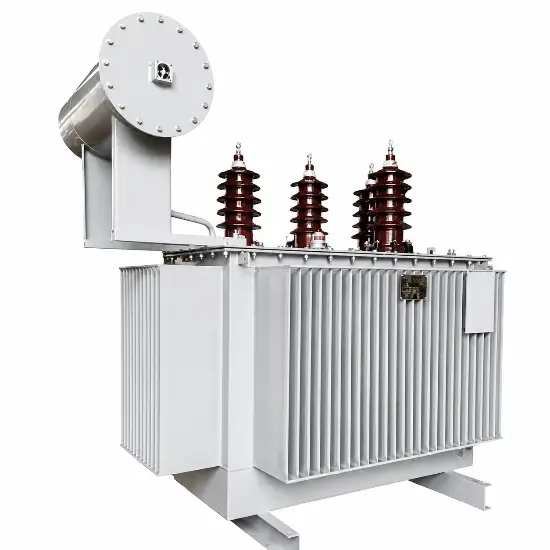
As shown in the image, the unit features a fully sealed welded tank design, eliminating the need for an oil conservator and preventing moisture ingress for maintenance-free operation.
- High-Voltage Bushings: The four robust porcelain/polymer bushings demonstrate a high-insulation design suitable for various medium-voltage applications, ensuring safety against flashover.
- Efficient Cooling: Visible corrugated fin radiators maximize the heat dissipation surface area, supporting stable operation under full load.
- Safety Accessories: Equipped with pressure relief devices and thermometer pockets on the tank cover for real-time internal monitoring and grid safety.
Design Highlights
-
ZN / ZNyn11 Zigzag Winding:Low zero-sequence impedance enables effective fault current return while keeping normal operating current minimal.
-
Fully Sealed Oil-Immersed Tank:Mineral oil insulation and sealed construction help protect the transformer from moisture, oxygen and environmental contamination.
-
Custom Short-Time Rating:Neutral current can be specified up to 3000 A with short-time durations of 10 s, 30 s or 60 s.
-
Flexible Cooling:Available with ONAN or ONAF cooling depending on site load and ambient conditions.
-
Optional Auxiliary Winding:A 0.4 kV auxiliary winding can be added for station service or local low-voltage supply.
Product Showcase Video
Technical Parameters
| Parameter | Value |
|---|---|
| Highest voltage for equipment (Um) | 36 kV |
| Rated frequency | 50 / 60 Hz |
| Number of phases | Three |
| Connection group | ZN (zigzag) / ZNyn11 |
| Rated capacity | Customizable (per project specification) |
| Rated neutral current | Up to 3000 A |
| Rated short-time duration | 10 s / 30 s / 60 s (customizable) |
| Zero-sequence impedance (Zo) | Per project specification (tolerance ≤ ±10 %) |
| Cooling method | ONAN / ONAF |
| Insulation medium | Mineral oil |
| Auxiliary winding | Optional (0.4 kV) |
| Ambient temperature | –25 °C to +40 °C |
| Installation | Indoor or outdoor |
| Enclosure options | IP-rated cabinet; optional CT, VT, or isolation switch |
Insulation Level
| System Voltage | Um (kV) | PF (kV) | LI (kV) |
|---|---|---|---|
| 33 kV | 36 | 70 | 170 |
Environmental Conditions
| Item | Value |
|---|---|
| Max ambient air temperature | +40°C |
| Max 24h average ambient air temperature | +35°C |
| Min ambient air temperature | -25°C |
| Altitude | ≤ 1000 m |
| Max relative humidity(24h average) | ≤ 95% |
| Max relative humidity(1 month average) | ≤ 90% |
| Max water vapor pressure(24h average) | 2.2 kPa |
| Max water vapor pressure(1 month average) | 1.8 kPa |
| Solar radiation | ≤ 1000 W/m² |
| Pollution level | II |
Suitable Applications
- Medium-voltage distribution network grounding
- Wind farm and PV plant grid connection
- Railway traction power systems
- Industrial and mining power distribution
- Regional substation grounding protection
- Urban power grid upgrading
Standards
- IEC 60076-6 — Power transformers – Part 6: Reactors (grounding transformer requirements)
- IEC 60076-1 — Power transformers (general)
- IEC 60071-1 — Insulation coordination
- ISO 9001 — Quality management system
How to Request a Quotation?
- System voltage and Um
- Required neutral current and short-time rating
- Target zero-sequence impedance
- Cooling method preference
- Indoor or outdoor installation
- Need for auxiliary winding
- Required accessories such as CT, VT, cabinet or isolation switch
Solutions for Grounding Transformer Manufacturer
-
 Oil-Immersed Grounding Transformer for Chile’s Mining and Renewable Energy NetworksChile has one of the more developed power standards systems in South America, with a grid architecture shaped by its unique geography. The northern mining and renewable energy hubs, such as the Atacama Desert PV clusters, commonly operate at 34.5kV or 23kV medium-voltage levels, under demanding environmental conditions. To address high altitude, high salinity, intense solar radiation and long-distance transmission, Rockwill provides customized oil-immersed grounding transformer solutions. This s
-
 Earthing Transformer Solution for Egypt’s Distribution NetworkAs a major economy in North Africa, Egypt’s power system is facing growing pressure from rapid urbanization and industrialization. In core cities such as Cairo and Alexandria, as well as in the Suez Canal Economic Zone, the distribution network relies heavily on cable systems with high capacitive earth fault currents. Many areas are also located near desert environments, where operating conditions are harsh.1. Challenge AnalysisTechnical challengesHigh wind-blown sand, large day-night temperatu
-
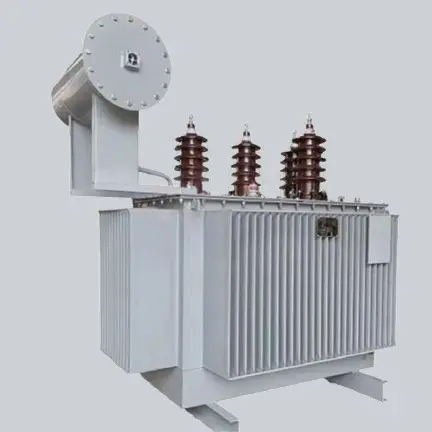 Intelligent Maintenance Services and Sustainable Solutions for Z-Type Grounding TransformersIntelligent Maintenance Services and Sustainable Solutions for Z-Type Grounding TransformersZ-type grounding transformers are critical for stabilizing ungrounded or delta-connected power systems by providing a low-impedance path for zero-sequence currents during faults. Integrating intelligent maintenance and sustainability practices enhances their reliability while minimizing environmental impact. Below is a structured analysis of advanced solutions:I. Intelligent Maintenance Services Real-Time
Documentation Resource Library Grounding Transformer Manufacturer
Certifications Grounding Transformer Manufacturer

FAQ for Grounding Transformer Manufacturer
Although fully‑sealed oil‑immersed design reduces daily maintenance workload, regular visual and preventive checks are still recommended.
For on‑site routine inspection, operators should observe oil level indicator to keep oil within normal range, check for oil leakage at weld seams, flange and valve positions, inspect porcelain/composite bushing surface for dirt, crack or tracking discharge traces, verify reliable earthing connection of tank shell. For annual preventive maintenance, oil‑sampling test including dielectric strength is suggested, tightening high‑voltage terminal connections, cleaning insulator surface dirt.
Since earthing transformer operates mostly under no‑load status in normal grid condition, most failures only reveal themselves under actual earth‑fault events, so visual check of external components forms the major part of daily care. Major internal disassembly is generally not required for sealed units under normal service life.
Oil‑immersed earthing transformer uses mineral oil as insulation and cooling medium. It features strong overload capability, good heat dissipation performance and competitive unit cost, well‑suited for outdoor substations, wind‑solar power plants, mining and industrial field sites where fire‑safety restriction is not extremely strict.
Fully‑sealed tank construction supports long‑term maintenance‑free outdoor operation. Dry‑type earthing transformer adopts cast‑resin insulation without combustible mineral oil, mainly applied for indoor locations with strict fire‑protection requirements such as urban underground substations, data‑center auxiliary power houses.
Dry‑type units normally come with higher procurement cost and relatively limited overload margin. There is no absolute good‑or‑bad between two types; selection should balance fire risk, installation location, budget and local specification requirements.
Standard design is validated for altitude up to 1000 m and pollution class II. When equipment is deployed above 1000 m, air dielectric strength decreases with altitude.
It requires increased creepage and clearance distance for high‑voltage bushings, together with corresponding insulation derating. For coastal locations with heavy salt fog, anti‑salt‑fog composite bushings and enhanced anti‑corrosion painting for the whole tank structure will be adopted.
Cooling performance also degrades under high‑altitude low‑air‑density environment, so thermal derating calculation will be completed accordingly.
These environmental modifications are completed during factory production phase instead of on‑site retrofitting, so special operating conditions should be notified at technical clarification stage.
To deliver a fully‑matched technical proposal, several core site parameters should be shared at the early project stage.
Apart from system nominal voltage, you need to provide the measured or calculated total system capacitive earth fault current, selected neutral earthing scheme whether resonant earthing with arc‑suppression coil or resistive earthing with neutral grounding resistor, relay protection operating time which defines required short‑time fault duration.
In addition, actual site environmental conditions including altitude, maximum and minimum ambient temperature, pollution level, relative humidity, installation location indoor or outdoor should be clarified.
If auxiliary station‑service power is required, the load kVA value for secondary winding shall also be specified. Complete site data helps avoid under‑specification or over‑engineering, ensuring the equipment fits local grid protection coordination requirements.
Earthing transformers are designed for short‑time fault duty rather than continuous earth‑fault operation. The short‑time duration defines how long the unit can safely sustain full rated neutral fault‑current without over‑heating.
Rockwill offers standard options of 10 s / 30 s / 60 s. This time setting must be coordinated with your whole‑grid relay‑protection operating time. For example, fast‑tripping resistive‑grounded systems may select 10 seconds, while resonant‑earthed networks with delayed‑fault clearing commonly adopt 30 s or 60 s rating.
Wrong selection of short‑time duration may result in excessive over‑heating risk under actual earth‑fault incidents.
Global standards for grounding transformers fall into IEEE and IEC systems. IEEE 32 (North America) emphasizes fault withstand capability and zero-sequence impedance, while IEC 60076 series covers winding design, insulation, cooling, and short-circuit tests. Chinese standards follow IEC with additional grid-specific requirements on efficiency, temperature rise, and harmonics.
-
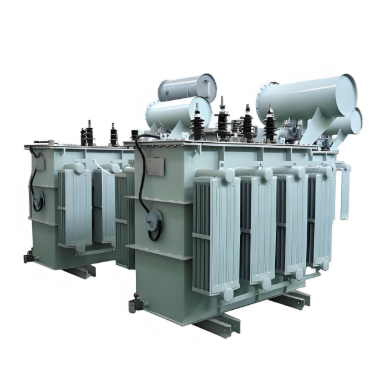
Oil-Immersed Neutral Grounding Transformer OEM ODM 17.5kV-40.5kV
-
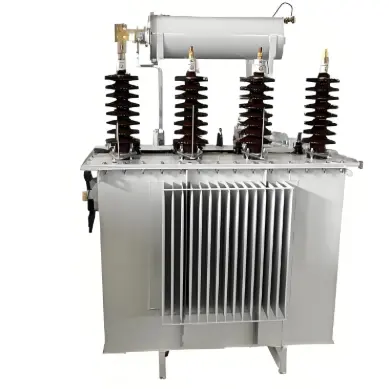
China Oil Immersed Grounding Transformer Manufacturer 15kV-35kV
-
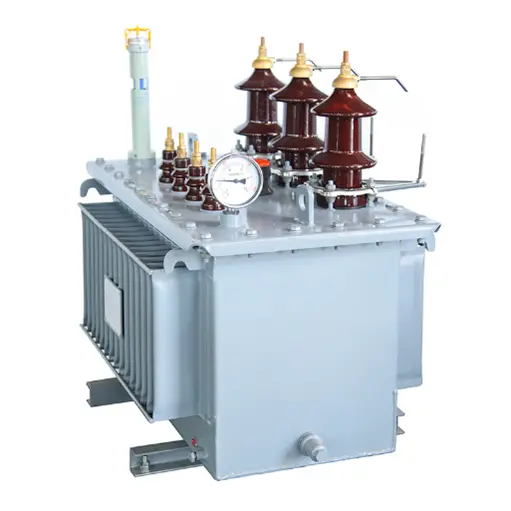
Three Phase Zig-Zag Type Oil-Immersed Earthing Transformer source manufacturer 34.5kV 35KV 88kV 110kV
-
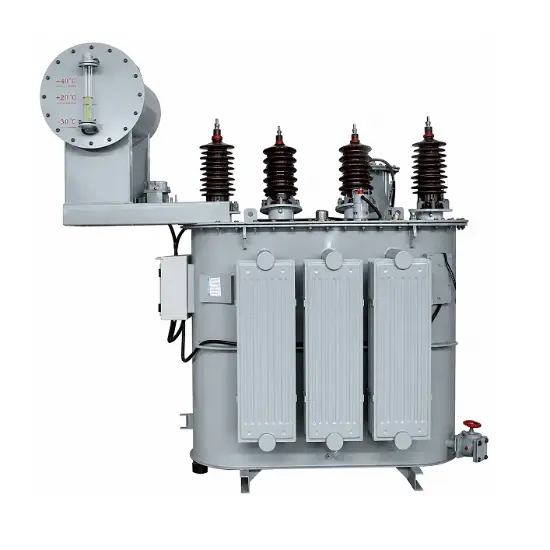
Customized Neutral Grounding Transformer Manufacturer-33kV
-
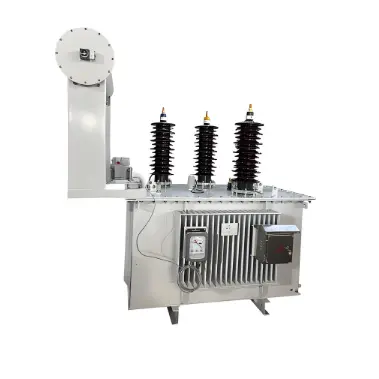
Three Phase Neutral Grounding Transformer Supplier 15kV-36kV
-
IEC Oil-Immersed Zigzag Earthing Transformer Manufacturer-11kV to 35kV

-
Three Phase Z-type Oil-Immersed Earthing Transformer OEM China 10kV-35kV
-
Single Phase Compact Oil Immersed Power Distribution Transformer 11kV
-
Single Phase Oil Immersed Power Distribution Transformer1250kVA/20kV
-
Oil-immersed amorphous alloy distribution transformer 35kV